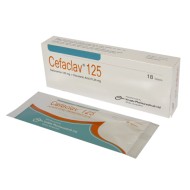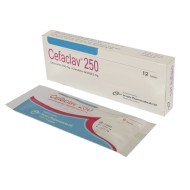
- Stock: Pre-Order
- Brand: Aristopharma
- Product ID: Cefuroxime Axetil + Clavulanic Acid
🔒 100% Secure Payment | bKash | Nagad | SSLCommerz | COD
⭐ Become a FREE Member: 7% Extra Savings • Free Delivery • Refill Reminders • Priority Support
This Item is for pre order
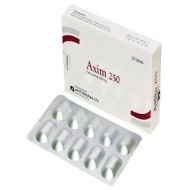
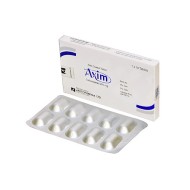
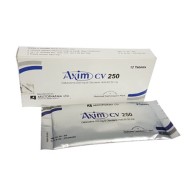
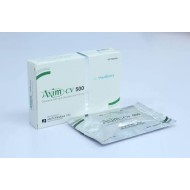
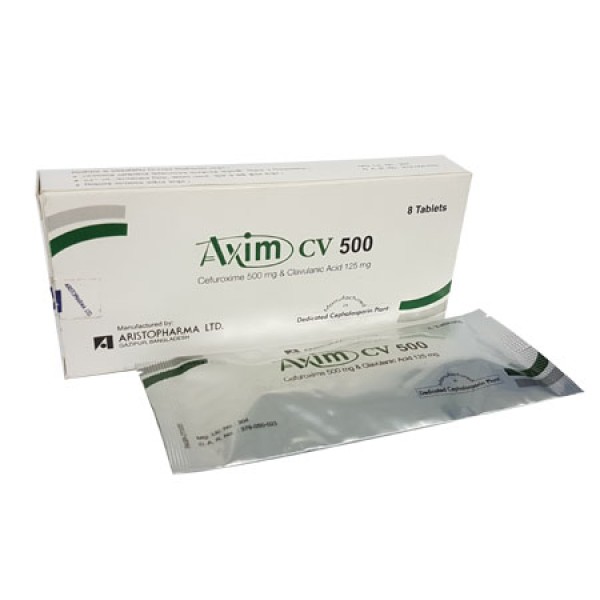
Axim CV 500 mg Tablet (Cefuroxime Axetil + Clavulanic Acid) — Clinical Overview
| Brand Name | Axim CV 500 mg Tab |
|---|---|
| Generic Name | Cefuroxime Axetil + Clavulanic Acid |
| Manufacturer | ACI Limited, Bangladesh |
| Strength | Cefuroxime 500 mg + Clavulanic Acid per tablet |
| Dosage Form | Film-coated Tablet |
| Pack Size | 10 tablets per strip |
| Drug Class | Beta-lactam Antibiotic + Beta-lactamase Inhibitor Combination |
| Prescription Status | Prescription Only Medicine (POM) |
What is Axim CV 500 mg?
Axim CV 500 mg Tab is the higher-dose formulation of ACI Limited's cefuroxime-clavulanate combination antibiotic. It contains cefuroxime axetil 500 mg paired with clavulanic acid — a beta-lactamase inhibitor that expands cefuroxime's antibacterial spectrum to include bacteria that produce certain beta-lactamase enzymes. The 500 mg dose is prescribed for more severe or deeply-seated infections where higher tissue antibiotic concentrations are required alongside the extended spectrum of the clavulanate addition.
This combination is particularly useful in clinical situations where infection is moderate-to-severe, the causative organism is unknown (empirical therapy), or a previous course of plain cefuroxime has not fully resolved the infection.
Mechanism of Action
Cefuroxime exerts bactericidal activity by binding to penicillin-binding proteins (PBPs), blocking peptidoglycan cross-linking in bacterial cell walls. At 500 mg, it achieves higher peak plasma concentrations (Cmax ~7–10 μg/mL) and maintains supratherapeutic tissue levels for a greater proportion of the dosing interval — important for time-dependent antibiotics like cephalosporins.
Clavulanic acid is a potent, irreversible inhibitor of class A and class C beta-lactamase enzymes. By permanently inactivating these enzymes before they can degrade cefuroxime, clavulanate restores and extends cefuroxime's bactericidal activity against resistant strains. The net result is broader antibacterial coverage with the same bactericidal mechanism.
Key limitation: Neither cefuroxime nor clavulanate inhibits extended-spectrum beta-lactamases (ESBLs) or metallo-beta-lactamases (MBLs). ESBL-producing E. coli and Klebsiella — significant pathogens in diabetic patients in South Asia — are NOT covered and require carbapenem or other targeted therapy.
Clinical Indications
Axim CV 500 mg is indicated for moderate-to-severe infections requiring broad-spectrum oral antibiotic coverage:
- Community-acquired pneumonia (CAP): When an unidentified beta-lactamase-producing pathogen is possible
- Acute exacerbations of chronic bronchitis (AECB): In patients with prior antibiotic exposure and possible resistant H. influenzae
- Complicated UTIs: With systemic signs or in diabetic patients where non-ESBL beta-lactamase producers are suspected
- Complicated skin and soft tissue infections: Deep cellulitis, infected surgical wounds, moderate diabetic foot infections with mixed flora
- Intra-abdominal infections (mild): As oral step-down after IV therapy
Diabetic Foot Infections — Clinical Role of Axim CV 500
Diabetic foot infections (DFIs) represent one of the most important indications for Axim CV 500 mg in diabetic patients. Per the International Working Group on the Diabetic Foot (IWGDF) guidelines:
- Mild DFIs: Can be treated with oral antibiotics; Axim CV 500 mg provides adequate coverage for MSSA, Streptococcus, and non-ESBL Gram-negative rods typically found in mild DFIs.
- Moderate DFIs without systemic sepsis: Oral Axim CV 500 mg twice daily is a reasonable option when the patient is not systemically unwell, there is no suspected osteomyelitis, and the wound is adequately debrided and offloaded.
- Severe DFIs and osteomyelitis: Require IV combination antibiotic therapy (e.g., piperacillin-tazobactam, clindamycin + ciprofloxacin) and urgent surgical assessment — oral Axim CV is NOT appropriate for these cases.
- Culture-guided therapy: IWGDF strongly recommends wound swab or deep tissue culture before starting antibiotics for DFIs. In Bangladesh, MRSA and ESBL-producing organisms are increasingly prevalent in diabetic foot wounds — these will not be covered by Axim CV.
Dosage and Administration
- Standard adult dose: 500 mg tablet twice daily × 7–14 days (duration varies by infection type and severity)
- Always take with food — both components are better absorbed with food, and clavulanate GI side effects (nausea, diarrhoea) are significantly reduced when taken with a meal
- Swallow whole — do not crush or chew; the film coat serves as both flavour masking and absorption optimisation
- Renal dose adjustment: Reduce to 250 mg twice daily if CrCl 10–30 mL/min; 250 mg once daily if CrCl <10 mL/min. Diabetic nephropathy patients should have eGFR checked before starting treatment.
Drug Interactions
- Warfarin / acenocoumarol: Potentiated anticoagulation — monitor INR at start of course and after completion
- Probenecid: Increases both cefuroxime and clavulanate plasma levels
- PPIs / H2-blockers / antacids: May reduce cefuroxime axetil absorption; taking with food partially compensates
- Metformin: No direct PK interaction; hold if acute kidney injury develops during severe infection
- Hormonal contraceptives: Reduced efficacy from gut flora disruption; use barrier contraception
- Live bacterial vaccines: Avoid during antibiotic course
Side Effects
GI side effects are more frequent with clavulanate-containing products than with plain cephalosporins:
- Very common: Diarrhoea, nausea (particularly at the 500 mg strength on an empty stomach)
- Common: Vomiting, abdominal cramps, headache, rash, flatulence
- Uncommon: Elevated liver enzymes (ALT/AST), cholestatic jaundice (rare — stop medication and seek medical review)
- Rare: Anaphylaxis, Stevens-Johnson syndrome, Clostridioides difficile colitis, erythema multiforme
Contraindications
- Known hypersensitivity to cefuroxime, clavulanic acid, any penicillin, or any cephalosporin
- History of hepatic dysfunction or jaundice associated with previous amoxicillin-clavulanate or cefuroxime-clavulanate use
- Severe immediate hypersensitivity (anaphylaxis) to penicillins
Frequently Asked Questions (FAQ)
Is Axim CV 500 mg used for diabetic foot infections?
Yes — Axim CV 500 mg twice daily is a reasonable oral option for mild-to-moderate non-limb-threatening diabetic foot infections (DFIs) where mixed bacteria (MSSA, Streptococcus, non-ESBL Gram-negatives) are likely. However, severe DFIs, suspected osteomyelitis, limb-threatening infections, and wounds with MRSA or ESBL-producing organisms require IV combination antibiotics and urgent surgical evaluation. A wound culture before starting antibiotics is strongly recommended.
What is the difference between Axim CV 250 and Axim CV 500 mg?
Both contain cefuroxime axetil with clavulanic acid. The 500 mg strength delivers higher cefuroxime plasma concentrations, making it appropriate for more severe infections requiring greater tissue drug levels — such as moderate pneumonia, severe sinusitis, moderate DFI, and AECB in high-resistance settings. The 250 mg dose is used for milder infections where lower drug concentrations are sufficient. Your doctor will select the appropriate strength based on infection severity.
How does Axim CV compare to co-amoxiclav (amoxicillin-clavulanate/Augmentin)?
Both Axim CV (cefuroxime-clavulanate) and co-amoxiclav (amoxicillin-clavulanate) are beta-lactam/beta-lactamase inhibitor combinations. Key differences: Axim CV has better stability against some beta-lactamases than amoxicillin-clavulanate; co-amoxiclav has broader anaerobic coverage and more clinical trial data. For most community-acquired infections, co-amoxiclav is preferred; Axim CV is used when cefuroxime's spectrum is specifically required or when amoxicillin-clavulanate tolerance is an issue.
How long is a typical Axim CV 500 course?
Typical course duration: UTIs 7–14 days; AECB/sinusitis 7–10 days; CAP 7–14 days; skin/DFI 7–14 days (up to 21 days in some DFI cases). Your doctor will specify the exact duration based on your infection, response to treatment, and any culture results. Do not stop early when feeling better — complete the full course to prevent relapse and antibiotic resistance.