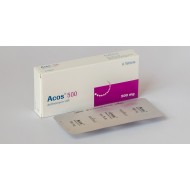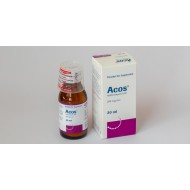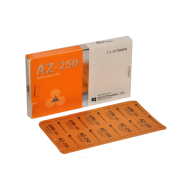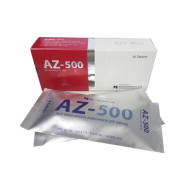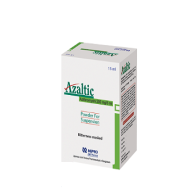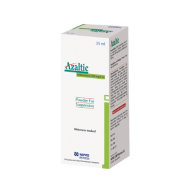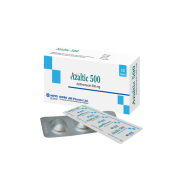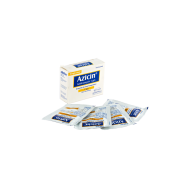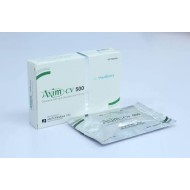
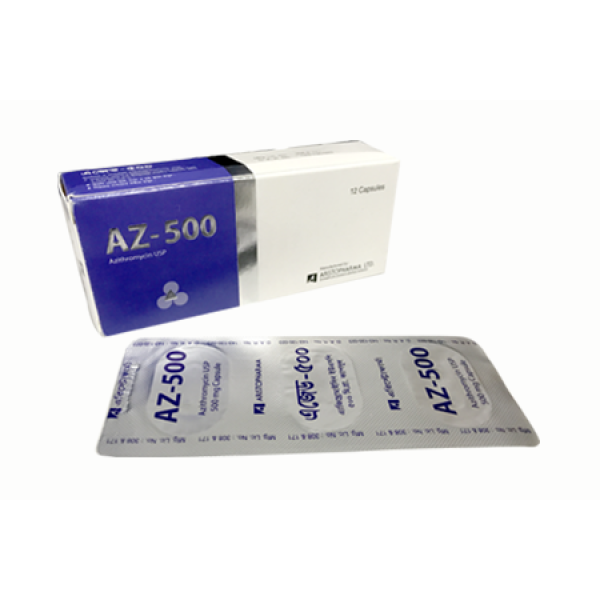
- Stock: In Stock
- Brand: Aristopharma
- Product ID: Azithromycin
Available Options
🔒 100% Secure Payment | bKash | Nagad | SSLCommerz | COD
⭐ Become a FREE Member: 7% Extra Savings • Free Delivery • Refill Reminders • Priority Support
This Item is for pre order
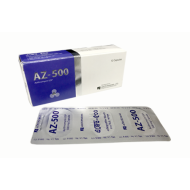
Az 500 Capsule (Azithromycin 500mg) — Clinical Overview
| Attribute | Details |
|---|---|
| Brand Name | Az |
| Generic Name | Azithromycin |
| Strength | 500 mg |
| Dosage Form | Hard Gelatin Capsule |
| Drug Class | Macrolide Antibiotic (Azalide subclass) |
| Manufacturer | ACI Limited, Bangladesh |
| Route of Administration | Oral |
About Az 500 Capsule
Az 500 Capsule contains azithromycin 500 mg in a hard gelatin capsule formulation by ACI Limited, Bangladesh. The 500 mg capsule is the adult standard dose formulation suitable for once-daily 3-day treatment regimens, loading dose initiation of 5-day courses, and specific single-dose or short-course STI treatment. As with all azithromycin capsule formulations, Az 500 Capsule must be taken on an empty stomach — food significantly reduces the absorption rate of azithromycin from capsules, and can reduce peak plasma concentrations by approximately 50%. This food requirement distinguishes the capsule formulation from film-coated tablets, which can be taken with food.
Azithromycin 500 mg provides 5–7 days of effective antibacterial activity in respiratory tissues after a single oral dose, due to the drug's remarkable pharmacokinetic properties: half-life of approximately 68 hours, volume of distribution of 31 L/kg reflecting extensive tissue penetration, and concentrations in bronchial mucosa, lung parenchyma, and alveolar macrophages that are 80–900 times higher than in plasma. These properties make azithromycin uniquely suited to once-daily dosing and short treatment courses.
Clinical Indications and Adult Dosing
Az 500 Capsule is indicated for: community-acquired pneumonia (mild to moderate, outpatient management) — 500 mg once daily for 3 days, or as day-1 loading dose followed by 250 mg daily for 4 more days; acute exacerbations of COPD/chronic bronchitis — 500 mg once daily for 3 days; acute bacterial sinusitis — 500 mg once daily for 3 days; uncomplicated skin and soft tissue infections — 500 mg on day 1, then 250 mg on days 2–5 (switch to 250mg capsules or tablets); uncomplicated typhoid fever — 500 mg once daily for 7 days; Chlamydia trachomatis infection — 1g single dose (two Az 500 capsules, taken together on an empty stomach); traveller's diarrhoea — 500 mg once daily for 3 days or 1g single dose; and long-term COPD exacerbation prophylaxis — 500 mg once daily for 3 days per month (under respiratory specialist guidance).
Azithromycin in Respiratory Infections — Atypical Pathogen Coverage
A key advantage of azithromycin over beta-lactam antibiotics (amoxicillin, cephalosporins) is its activity against atypical respiratory pathogens — organisms that lack a cell wall and are therefore intrinsically resistant to all beta-lactams. The three most clinically important atypical respiratory pathogens are: Mycoplasma pneumoniae — the leading cause of "walking pneumonia" and community-acquired pneumonia in younger adults and school-age children; Chlamydophila pneumoniae — causes 10–20% of community pneumonia cases; Legionella pneumophila — causes severe Legionnaires' disease pneumonia, especially in immunocompromised patients and the elderly. Azithromycin 500 mg once daily for 3–5 days is highly effective against all three organisms. For hospitalised patients with moderate-to-severe CAP, azithromycin is added to a beta-lactam to provide dual coverage against both typical and atypical pathogens — a strategy that has been shown to reduce in-hospital mortality in observational studies.
Antibiotic Stewardship — Appropriate Use of Az 500 Capsule
Azithromycin is among the most prescribed antibiotics in Bangladesh, and its overuse has contributed to rising macrolide resistance rates. Appropriate indications for Az 500 Capsule: confirmed or clinically strongly suspected bacterial infections where azithromycin is a guideline-recommended treatment option; penicillin-allergic patients with susceptible infections; infections caused by atypical organisms where beta-lactams are ineffective; and specific STI treatment as directed by current guidelines. Inappropriate indications that drive resistance: viral upper respiratory tract infections (the common cold); COVID-19 (multiple large RCTs have definitively shown no benefit); viral pharyngitis (most sore throats are viral); prophylactic use without clear evidence basis. Prescribers are encouraged to apply diagnostic stewardship (using clinical criteria to distinguish viral from bacterial infections) before prescribing Az 500 Capsule.
Storage and Handling
Store Az 500 Capsule below 30°C in a dry place away from direct light and moisture. Do not store in the bathroom or kitchen where humidity is high. Keep in original packaging to protect from light. Keep out of reach of children. Do not use after the expiry date printed on the pack. Protect from freezing. Capsules should not be crushed, chewed, or opened — swallow whole with a glass of water on an empty stomach. If you miss a dose, take it as soon as remembered on the same day; if it is the next day, skip the missed dose and continue with the next scheduled dose — do not double up.
Frequently Asked Questions (FAQ)
Q1: Why must Az 500 Capsule be taken on an empty stomach?
Azithromycin capsule formulations show a significant food interaction — food reduces the rate and extent of absorption, lowering peak plasma concentrations (Cmax) by approximately 50% compared to fasting. Film-coated tablets have a different formulation that minimises this interaction. Taking Az 500 Capsule with food may result in subtherapeutic drug levels and treatment failure. The capsule must be taken at least 1 hour before or 2 hours after any food. Water is permitted for swallowing the capsule. If severe stomach upset occurs when taken on an empty stomach, consult your physician about whether switching to the tablet formulation is appropriate.
Q2: Is a 3-day course of Az 500 Capsule really enough for pneumonia?
Yes, for mild community-acquired pneumonia. Azithromycin's prolonged tissue half-life means that after 3 daily doses of 500 mg, the drug remains at therapeutic concentrations in lung tissue for an additional 5–7 days — providing approximately 10 days of total antibacterial activity. Multiple randomised controlled trials have confirmed that a 3-day azithromycin course (500mg daily × 3 days) is as effective as longer courses of other antibiotics for mild CAP. For hospitalised patients with severe pneumonia, longer courses combined with beta-lactams may be appropriate.
Q3: Can Az 500 Capsule cause heart rhythm problems?
Azithromycin can prolong the cardiac QT interval, which in rare cases may lead to serious arrhythmias. The absolute risk is very low in otherwise healthy patients. The risk is higher in patients with: pre-existing QT prolongation, hypokalaemia, bradycardia, heart failure, or those taking other QT-prolonging medications. The FDA issued a safety communication in 2013 about this risk. In practice, azithromycin remains a safe antibiotic for the vast majority of patients. Patients with known cardiac risk factors should discuss with their physician before taking azithromycin.
Q4: Can I take Az 500 Capsule for a tooth infection or dental abscess?
Azithromycin can be used for dental infections caused by oral streptococci and anaerobic organisms, particularly in patients allergic to penicillin (amoxicillin is the first-line treatment). Standard regimen: 500mg on day 1 then 250mg on days 2–5. However, dental abscesses often require drainage in addition to antibiotics — antibiotics alone are insufficient for a fluctuant abscess requiring surgical drainage. Consult a dentist for definitive management; azithromycin alone will not resolve an undrained abscess.
Medical Disclaimer: For healthcare professional reference and patient education only. Az 500 Capsule is a prescription-only antibiotic. All dosing and indication decisions must be made by a qualified physician. Antibiotic overuse contributes to drug resistance — a global public health emergency.