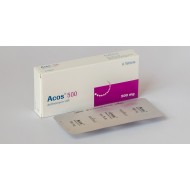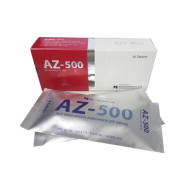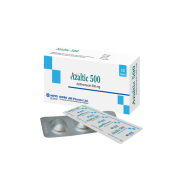
- Stock: In Stock
- Brand: Labaid Pharma Ltd.
- Product ID: Azithromycin
Available Options
🔒 100% Secure Payment | bKash | Nagad | SSLCommerz | COD
⭐ Become a FREE Member: 7% Extra Savings • Free Delivery • Refill Reminders • Priority Support
Azilab 500mg Tablet — Azithromycin by Labaid Pharma for Community & Hospital-Managed Infections
| Attribute | Details |
|---|---|
| Brand Name | Azilab |
| Generic Name | Azithromycin |
| Strength | 500 mg per tablet |
| Dosage Form | Tablet |
| Drug Class | Macrolide Antibiotic (Azalide) |
| Manufacturer | Labaid Pharma Ltd., Bangladesh |
| Route of Administration | Oral |
About Azilab 500mg Tablet
Azilab 500mg Tablet contains azithromycin 500 mg per tablet, manufactured by Labaid Pharma Ltd., Bangladesh. This preparation provides the full adult 500mg dose in a single tablet, enabling simple once-daily dosing for the complete range of standard azithromycin indications. Labaid Pharma is one of Bangladesh's established pharmaceutical manufacturers. The 500mg tablet format is the most widely used azithromycin formulation in adult clinical practice in Bangladesh due to its versatility: a 3-day once-daily course delivers the same 1500mg total dose as the classic 5-day 250mg course; two tablets taken simultaneously provide the 1g single dose needed for STI treatment; and one tablet daily for 5–7 days covers typhoid treatment and MAC prophylaxis regimens. The tablet's high dose strength supports the widest range of therapeutic applications within a single product.
Azithromycin vs Fluoroquinolones for Respiratory Infections
A clinically important prescribing consideration in Bangladesh is the choice between azithromycin (macrolide) and fluoroquinolones (levofloxacin, ciprofloxacin, moxifloxacin) for respiratory infections. Both classes cover atypical respiratory pathogens (Mycoplasma, Chlamydophila, Legionella) that beta-lactams miss. Key differences: azithromycin is bacteriostatic against most respiratory pathogens at standard doses, while respiratory fluoroquinolones (levofloxacin, moxifloxacin) are bactericidal — potentially faster symptom resolution in severe CAP. However, fluoroquinolones are associated with greater tendon, neurological, and cardiac side effects; are more expensive; and their broad-spectrum activity selects more readily for resistance including multi-drug resistant tuberculosis (a particular concern in TB-endemic Bangladesh). For mild-to-moderate outpatient CAP in otherwise healthy patients, azithromycin 500mg for 3 days remains the preferred choice, reserving fluoroquinolones for severe CAP, healthcare-associated infections, or failure of first-line therapy.
Combination Therapy with Beta-Lactams
For hospitalised patients with moderate-to-severe community-acquired pneumonia, combination therapy using a beta-lactam antibiotic (amoxicillin-clavulanate, ceftriaxone, or ampicillin-sulbactam) plus azithromycin is the international standard of care. The rationale: beta-lactams cover typical organisms (Streptococcus pneumoniae, H. influenzae) with bactericidal activity; azithromycin adds coverage for atypical pathogens (Mycoplasma, Chlamydophila, Legionella) that cause 20–40% of hospitalised CAP and are missed by beta-lactams alone. Retrospective studies and RCTs consistently show reduced mortality and length of stay with beta-lactam plus macrolide combination compared with beta-lactam monotherapy for hospitalised CAP, even when Legionella or Mycoplasma is not confirmed — likely due to azithromycin's immunomodulatory anti-inflammatory effects in addition to its antibacterial activity. In Bangladesh, the typical combination for moderate hospitalised CAP is IV ceftriaxone plus oral azithromycin 500mg once daily.
Special Populations — Renal and Hepatic Impairment
Renal impairment: Azithromycin is primarily eliminated via biliary excretion; renal excretion accounts for only 6% of elimination. No dose adjustment is required for mild-to-moderate renal impairment (GFR >10 mL/min). Use with caution in severe renal impairment (GFR <10 mL/min) as some accumulation of metabolites may occur; clinical monitoring is recommended. This makes azithromycin particularly appropriate for diabetic patients with chronic kidney disease (CKD) — a very common diabetic complication — who require antibiotic therapy but have limited options due to renal dose restrictions on many antibiotics. Hepatic impairment: Azithromycin is extensively metabolised in the liver. In mild-to-moderate hepatic impairment, pharmacokinetics are not significantly altered and standard dosing is appropriate. In severe hepatic impairment, use azithromycin with caution and monitoring; dose reduction may be considered. Azithromycin should be avoided if hepatocellular hepatotoxicity (rare) is suspected to be caused by a previous azithromycin course.
Pregnancy and Lactation Safety
Pregnancy: Azithromycin is classified as FDA Pregnancy Category B. Animal studies have not demonstrated teratogenicity. Limited human data does not suggest increased rates of major birth defects at standard therapeutic doses; azithromycin is considered one of the safer antibiotic options during pregnancy when macrolide therapy is indicated. It is particularly appropriate for treating Chlamydia trachomatis infection in pregnancy (1g single dose is the standard regimen), as erythromycin (the traditional alternative) has poorer tolerability. Azithromycin is preferred over doxycycline (contraindicated in pregnancy due to fetal bone and tooth effects) for respiratory infections in pregnant patients with penicillin allergy or atypical pathogen coverage needs. Lactation: Azithromycin is excreted in breast milk in small amounts (estimated infant dose <5% of maternal dose). The short course duration (3 days for respiratory infections) and low infant exposure make Azilab 500mg generally acceptable during breastfeeding under physician guidance.
Frequently Asked Questions (FAQ)
Q1: Can Azilab 500mg be used alongside amoxicillin for pneumonia?
Yes — combination of azithromycin 500mg with a beta-lactam antibiotic (amoxicillin-clavulanate, ceftriaxone, or ampicillin) is standard therapy for moderate-to-severe community-acquired pneumonia requiring hospitalisation. There is no pharmacokinetic interaction between azithromycin and beta-lactams — they work via different mechanisms (protein synthesis inhibition vs cell wall synthesis inhibition) and their combination is synergistic or at minimum additive. Multiple clinical trials support this combination for hospitalised CAP, with improved outcomes compared to beta-lactam alone. In outpatient mild CAP, azithromycin monotherapy is generally sufficient as most mild CAP pathogens are covered by azithromycin alone.
Q2: Is Azilab 500mg safe for patients with kidney disease?
Yes — azithromycin is one of the antibiotics most suitable for patients with chronic kidney disease (CKD). Since it is primarily eliminated via the liver and bile (not the kidneys), no dose adjustment is required for mild-to-moderate renal impairment. This contrasts with many other commonly used antibiotics in Bangladesh (ciprofloxacin, cotrimoxazole, gentamicin) that require significant dose reduction or avoidance in CKD. Diabetic patients often develop diabetic nephropathy leading to CKD — Azilab 500mg provides a convenient standard-dose option without renal dose calculations for most of these patients.
Q3: How is Azilab 500mg used for preventing MAC infection in HIV patients?
Azithromycin 1200mg once weekly (equivalent to 2.4 tablets of 500mg rounded to 2 tablets = 1000mg weekly, or physicians may prescribe 1000mg = 2 tablets as a practical approximation) is used for MAC (Mycobacterium avium complex) prophylaxis in HIV-positive patients with very low CD4 counts (below 50 cells/µL). This prophylactic indication exploits azithromycin's long tissue half-life and macrophage accumulation to maintain effective concentrations against MAC organisms in immune cells over a weekly dosing interval. MAC prophylaxis is managed by HIV/infectious disease specialists. In Bangladesh, with expanding HIV treatment programs, MAC prophylaxis remains relevant for patients presenting late with advanced immunodeficiency.
Q4: Can Azilab 500mg be used in pregnancy for chlamydia?
Yes — azithromycin 1g single dose (two Azilab 500mg tablets taken simultaneously) is the preferred treatment for uncomplicated genital Chlamydia trachomatis infection in pregnant women. It is considered safe in pregnancy (Pregnancy Category B) and is more tolerable than erythromycin (the traditional alternative) which causes significant GI side effects in pregnant patients. Treating chlamydial infection in pregnancy is important: untreated maternal chlamydia is associated with preterm delivery, low birthweight, and neonatal eye infection (chlamydial ophthalmia neonatorum) requiring topical antibiotic treatment in the newborn. Test-of-cure 3–5 weeks after treatment is recommended for chlamydia in pregnancy.
Medical Disclaimer: Azilab 500mg Tablet requires a valid prescription. Use strictly for confirmed or strongly suspected bacterial infections under physician guidance. Azithromycin is not effective for viral infections including common cold, influenza, or viral pneumonitis. Complete the full prescribed course to prevent treatment failure and resistance development.