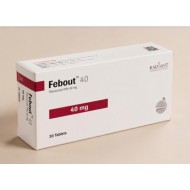
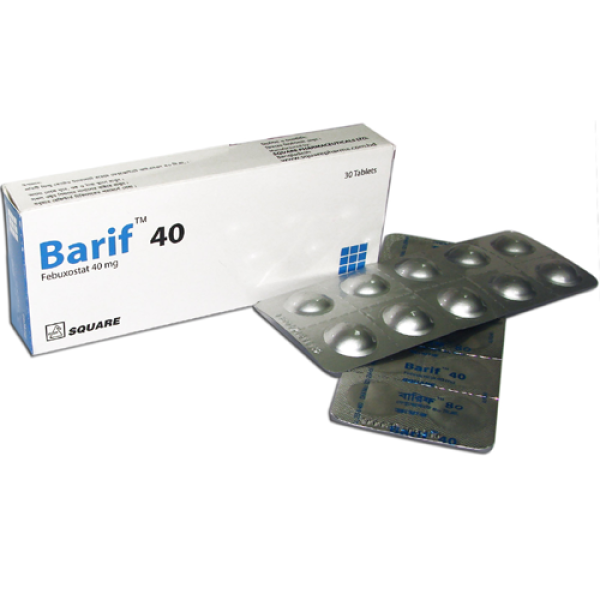
- Stock: Out Of Stock
- Brand: Square Pharmaceuticals
- Product ID: Febuxostat
🔒 100% Secure Payment | bKash | Nagad | SSLCommerz | COD
⭐ Become a FREE Member: 7% Extra Savings • Free Delivery • Refill Reminders • Priority Support
This Item is for pre order
| Generic Name | Febuxostat |
| Strength | 40 mg |
| Dosage Form | Tablet |
| Manufacturer | Square Pharmaceuticals PLC |
| Therapeutic Class | Drugs used in Gout |
| Pack Size | 3 x 10's Tablet (Strip) |
Overview
Barif 40 mg Tablet is manufactured by Square Pharmaceuticals PLC, containing Febuxostat as its active ingredient. Febuxostat is a non-purine, selective xanthine oxidase (XO) inhibitor used for the chronic management of hyperuricemia in patients with gout.
Indications
Barif tablets are indicated for the chronic management of hyperuricemia in patients with gout. Barif tablets are not recommended for the treatment of asymptomatic hyperuricemia.
Pharmacology
Febuxostat decreases serum uric acid level by inhibiting xanthine oxidase, which is responsible for uric acid production. Xanthine oxidase breaks down hypoxanthine to xanthine and thus to uric acid. Febuxostat is not expected to inhibit other enzymes involved in purine and pyrimidine synthesis and metabolism at therapeutic concentrations.
Dosage and Administration
Recommended starting dose: Febuxostat 40 mg tablet once daily. For patients who do not achieve a serum uric acid less than 6 mg/dL after 2 weeks with the 40 mg tablet, one 80 mg tablet once daily is recommended. If serum uric acid remains above 6 mg/dL after 2-4 weeks with the 80 mg tablet, one 120 mg tablet once daily is recommended.
Gout Flares: Gout flares may occur after initiation of Febuxostat due to changing serum uric acid levels resulting in mobilization of urate from tissue deposits. Flare prophylaxis with an NSAID or colchicine is recommended upon initiation of treatment. If a gout flare occurs during treatment, Febuxostat need not be discontinued.
Renal impairment: No dose adjustment is necessary in patients with mild to moderate renal impairment.
Hepatic impairment: No dose adjustment is necessary in patients with mild to moderate hepatic impairment.
Pediatric Use: Safety and effectiveness in pediatric patients under 18 years of age have not been established.
Interaction
Mercaptopurine/Azathioprine: Concomitant use is not recommended, as inhibition of xanthine oxidase may cause increased plasma concentrations of these drugs leading to toxicity.
Naproxen and other inhibitors of glucuronidation: Febuxostat can be co-administered with naproxen with no dose adjustment necessary.
Inducers of glucuronidation: Potent inducers of UGT enzymes might lead to increased metabolism and decreased efficacy; monitoring of serum uric acid is recommended 1-2 weeks after starting treatment with such an agent.
Colchicine/Indomethacin/Hydrochlorothiazide/Warfarin: No dose adjustment is necessary when co-administered with Febuxostat.
Antacids: Concomitant ingestion of magnesium hydroxide/aluminium hydroxide antacids delays absorption slightly but does not significantly change overall exposure; Febuxostat may be taken without regard to antacid use.
Contraindications
Febuxostat is contraindicated in patients being treated with azathioprine, mercaptopurine, or theophylline.
Side Effects
The most commonly reported adverse reactions are gout flares, liver function abnormalities, diarrhoea, nausea, headache, rash, and oedema. These reactions are mostly mild or moderate in severity. Rare serious hypersensitivity reactions have been observed.
Pregnancy and Lactation
Pregnancy Category C. There are no adequate and well-controlled studies in pregnant women. Febuxostat should be used during pregnancy only if the potential benefit justifies the potential risk to the fetus. It is not known whether this drug is excreted in human milk; caution should be exercised when administered to a nursing woman.
Precautions and Warnings
Gout Flare: An increase in gout flares is frequently observed during initiation of anti-hyperuricemic agents, including Barif. Prophylactic therapy with an NSAID or colchicine upon initiation may be beneficial for up to six months.
Cardiovascular Events: A higher rate of cardiovascular thromboembolic events was observed in patients treated with Febuxostat than allopurinol in clinical trials. Patients should be monitored for signs and symptoms of MI and stroke.
Liver Enzyme Elevation: Transaminase elevations have been observed; liver function tests should be monitored periodically.
Overdose Effects
Febuxostat has been studied in healthy subjects at doses up to 300 mg daily for seven days without evidence of dose-limiting toxicities.
Storage Conditions
Keep below 30°C temperature, away from light and moisture. Keep out of the reach of children.
Frequently Asked Questions
Q1: What is Barif 40 mg Tablet used for?
Barif 40 mg Tablet (Febuxostat) is used for the chronic management of hyperuricemia in patients with gout.
Q2: How should Barif 40 mg be taken?
The recommended starting dose is one 40 mg tablet once daily, which may be adjusted to 80 mg if target uric acid levels are not achieved after 2 weeks.
Disclaimer: This information is for educational purposes only and is not a substitute for professional medical advice. Always consult a registered physician or pharmacist before taking any medication. Dosage, indications, and precautions may vary based on individual health conditions.