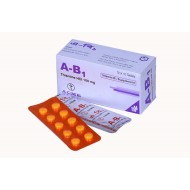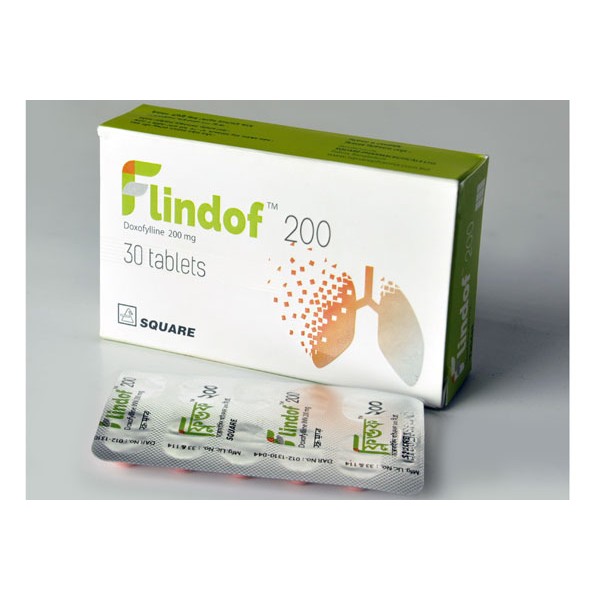
- Stock: In Stock
- Brand: Square Pharmaceuticals
- Product ID: Doxofylline INN
🔒 100% Secure Payment | bKash | Nagad | SSLCommerz | COD
⭐ Become a FREE Member: 7% Extra Savings • Free Delivery • Refill Reminders • Priority Support
| Generic Name | Doxophylline |
|---|---|
| Strength | 200 mg |
| Dosage Form | Tablet |
| Manufacturer | Square Pharmaceuticals PLC |
| Therapeutic Class | Bronchodilator, Methyl xanthine derivatives |
| Pack Size | 3 × 10 tablets |
Overview
Flindof 200mg Tablet contains Doxophylline, a novel bronchodilator belonging to the methylxanthine class. Doxophylline is structurally distinct from Theophylline due to the presence of a dioxolane group at position 7, which confers a more selective pharmacological profile and better safety margin. It selectively inhibits phosphodiesterase 4, relaxing bronchial smooth muscle and relieving bronchospasm. It is indicated for bronchial asthma, bronchospasm, chronic obstructive pulmonary disease (COPD), and pulmonary diseases with a spastic bronchial component.
Dosage and Administration
Elderly patients: 200 mg two to three times daily. Adults: 400 mg two to three times daily, or as prescribed by the physician. Children over 12 years: 200 mg two to three times daily. Children 6–12 years: 6–9 mg/kg body weight twice daily. Flindof should be used only on the prescription of a specialist physician.
Interaction
Flindof should not be administered with other xanthine preparations. Beverages and foods containing caffeine should be limited. Caution should be exercised when administered with ephedrine or other sympathomimetic drugs. Concurrent administration of erythromycin, TAO, lincomycin, clindamycin, allopurinol, cimetidine, influenza vaccine, or propranolol may reduce hepatic clearance of xanthine derivatives, increasing plasma drug levels. Phenytoin, other anticonvulsants, and cigarette smoking may increase clearance, reducing plasma half-life.
Contraindications
Flindof is contraindicated in patients with known hypersensitivity to Doxophylline or other xanthine derivatives, acute myocardial infarction, hypotension, and during lactation.
Side Effects
Patients may experience nausea, vomiting, epigastric pain, headache, irritability, insomnia, tachycardia, extrasystoles, tachypnea, and in rare cases hyperglycaemia or albuminuria. In case of overdose, severe cardiac arrhythmias and tonic-clonic seizures may occur. The appearance of side effects may require discontinuation of treatment.
Pregnancy and Lactation
Animal studies have shown that Doxophylline does not interfere with pre- and postnatal growth. However, as clinical evidence in pregnancy is limited, use should be carefully evaluated on a case-by-case basis considering the risk-benefit ratio. Doxophylline is contraindicated during lactation.
Precautions and Warnings
Use with caution in patients with cardiac disease, hypertension, severe hypoxaemia, hyperthyroidism, chronic cor pulmonale, congestive heart failure, liver disease, peptic ulcer, or renal impairment. Various factors may reduce hepatic clearance and increase plasma drug levels; in such cases, dose reduction and blood level monitoring is recommended. Flindof should be used only on the prescription of a specialist physician.
Storage Conditions
Store in a dry place, away from light and heat. Keep out of reach of children.
Frequently Asked Questions
Q: How is Doxophylline different from Theophylline?
A: Doxophylline is a newer methylxanthine that selectively inhibits phosphodiesterase 4 and has lower affinity for adenosine receptors compared to Theophylline, resulting in a better safety and tolerability profile with fewer cardiovascular and CNS side effects.
Q: Can Flindof 200mg be taken with caffeine-containing beverages?
A: It is recommended to limit consumption of caffeine-containing beverages (coffee, tea, cola) while taking Flindof, as caffeine is also a xanthine derivative and concurrent use may increase the risk of side effects.