- Stock: Out Of Stock
- Brand: Square Pharmaceuticals
- Product ID: L-Ornithine L-Aspartate
🔒 100% Secure Payment | bKash | Nagad | SSLCommerz | COD
⭐ Become a FREE Member: 7% Extra Savings • Free Delivery • Refill Reminders • Priority Support
This Item is for pre order
| Generic Name | L-Ornithine L-Aspartate |
|---|---|
| Strength | 150 mg |
| Dosage Form | Tablet |
| Manufacturer | Square Pharmaceuticals PLC |
| Therapeutic Class | Digestive Enzyme |
| Pack Size | 5 x 6 (30's) |
Overview
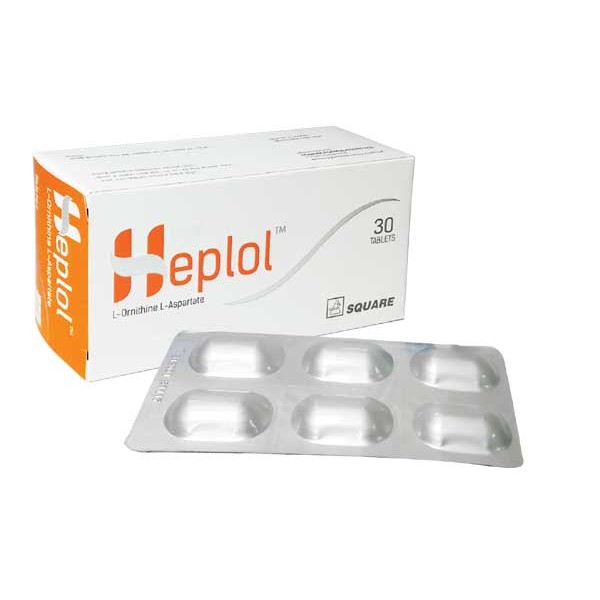
Heplol Tablet contains L-Ornithine L-Aspartate 150 mg, a stable combination of two important endogenous amino acids — L-Ornithine and L-Aspartate. After oral administration, the combination is rapidly cleaved into its component amino acids. L-Ornithine acts as a substrate for the urea cycle, converting toxic ammonia into non-toxic urea that is safely eliminated via the kidneys — thereby supporting the diseased liver in its detoxification function and reducing hyperammonaemia. L-Aspartate is an essential component of the citric acid cycle, liberating energy (ATP) to support regeneration of damaged liver cells. Heplol is indicated for hepatic encephalopathy, acute liver failure, hyperammonaemia due to acute and chronic hepatitis, fatty liver, alcoholic liver damage, liver cirrhosis, post-hepatitis convalescence, and as an adjunct to hepatotoxic drug therapy.
Dosage and Administration
Tablet/Sachet: 1–2 sachets dissolved in a large amount of fluid (e.g. a glass of water or juice), taken orally 3 times daily during or after meals.
For the injectable formulation (Infusion Concentrate): Recommended dose is up to 20 gm (4 ampoules) daily; up to 8 ampoules within 24 hours in pre-coma or coma states. Dilute 1 ampoule per 100 ml IV fluid; do not exceed 6 ampoules per 500 ml infusion. Infusion rate: maximum 5 gm per hour. Compatible with 0.9% Sodium Chloride, 5% Dextrose, and Ringer's Lactate; stable up to 24 hours.
Interaction
No clinically significant drug interactions with Heplol have been identified. However, patients on concurrent medications for liver disease should consult their physician before use.
Contraindications
Heplol is contraindicated in patients with known hypersensitivity to L-Ornithine, L-Aspartate, or any component of the formulation. Administration during pregnancy and lactation should be avoided.
Side Effects
Side effects are very rare. Nausea and vomiting have been occasionally reported; these are usually transient and do not necessitate withdrawal of the drug.
Pregnancy and Lactation
Administration of Heplol during pregnancy and lactation should be avoided due to insufficient safety data in these populations.
Precautions and Warnings
Regular monitoring of serum and urinary urea levels at regular intervals is recommended during treatment. Heplol should be used under the supervision of a physician experienced in the management of liver disease. Store in a cool and dry place, away from light.
Storage Conditions
Store in a cool and dry place, away from light. Keep out of the reach of children.
Frequently Asked Questions
Q: What is Heplol used for?
Heplol (L-Ornithine L-Aspartate) is used for a range of liver conditions including hepatic encephalopathy, hyperammonaemia, fatty liver, alcoholic liver damage, liver cirrhosis, acute liver failure, and post-hepatitis recovery. It works by supporting the liver's ability to convert toxic ammonia into urea and promoting energy production for liver cell regeneration.
Q: How does Heplol reduce ammonia levels?
L-Ornithine, one of the two active components in Heplol, serves as a substrate for the urea cycle. It helps the liver convert toxic ammonia into non-toxic urea, which is then excreted by the kidneys. This reduces elevated blood ammonia levels (hyperammonaemia), a common and dangerous complication of liver disease.