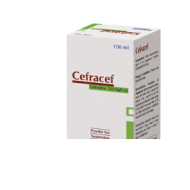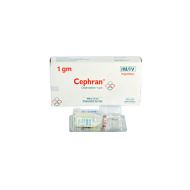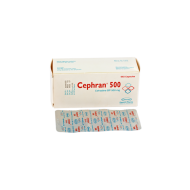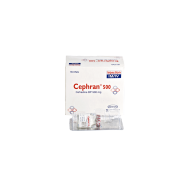
- Stock: In Stock
- Brand: Square Pharmaceuticals
- Product ID: Cephradine
🔒 100% Secure Payment | bKash | Nagad | SSLCommerz | COD
⭐ Become a FREE Member: 7% Extra Savings • Free Delivery • Refill Reminders • Priority Support
| Generic Name | Cephradine |
|---|---|
| Strength | 500 mg/vial |
| Dosage Form | IM/IV Injection |
| Manufacturer | Square Pharmaceuticals PLC |
| Therapeutic Class | First generation cephalosporins |
| Pack Size | 500 mg vial |
Overview
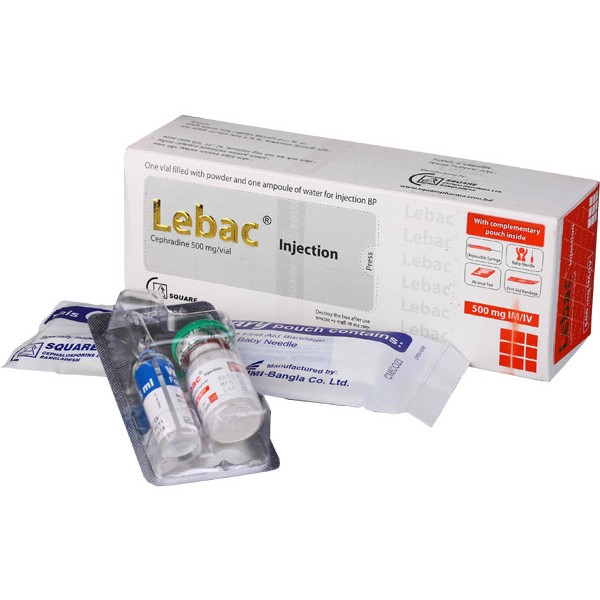
Lebac 500 mg IM/IV Injection contains Cephradine, a first-generation cephalosporin antibiotic manufactured by Square Pharmaceuticals PLC. The injectable formulation is indicated for moderate to severe bacterial infections where parenteral administration is required. Cephradine exerts bactericidal action by inhibiting bacterial cell wall synthesis and is effective against susceptible Gram-positive and Gram-negative organisms. It remains active against many penicillinase-producing and ampicillin-resistant strains.
Lebac injection is used for moderate to severe respiratory tract infections, urinary tract infections, skin and soft tissue infections, and for surgical prophylaxis. It is also indicated when patients cannot take oral therapy or when higher systemic concentrations are required.
Dosage and Administration
Adults: 2–4 g/day in four equally divided doses (i.e., 500 mg–1 g every 6 hours), up to 8 g/day in severe infections. For surgical prophylaxis: a single preoperative dose of 1–2 g by IM or IV route. Patients may be transferred from IV/IM to oral Lebac therapy at the same dosage level once clinical improvement occurs.
Children: 50–100 mg/kg/day in four equally divided doses, up to 300 mg/kg/day in severe infections.
Administration: Reconstitute with sterile water for injection or appropriate diluent as directed. IV solutions should be used within 2 hours at room temperature, or within 12 hours at 5°C. Solutions may vary in colour from light to straw yellow — this does not affect potency.
Interaction
Concurrent use with aminoglycosides or loop diuretics (furosemide, ethacrynic acid) may increase the risk of nephrotoxicity. Probenecid may raise Cephradine plasma levels by reducing renal elimination. Cephradine may interfere with Benedict's or Fehling's urine glucose tests, producing false-positive results; enzyme-based glucose tests are unaffected.
Contraindications
Contraindicated in patients with known or suspected hypersensitivity to cephalosporins. Use with caution in penicillin-allergic patients due to the possibility of cross-reactivity between beta-lactam antibiotics.
Side Effects
Local reactions at the injection site (pain, phlebitis) may occur with IV administration. Systemic effects include gastrointestinal disturbances, hypersensitivity reactions (rash, urticaria, anaphylaxis), blood dyscrasias (thrombocytopenia, agranulocytosis), transient hepatic enzyme elevation, and reversible interstitial nephritis. Positive Coombs' test may occur.
Pregnancy and Lactation
Safety during human pregnancy has not been fully established. Cephradine is excreted in breast milk; use with caution in nursing mothers. Use only when clearly indicated.
Precautions and Warnings
Reconstituted injection solutions should be used within 2 hours at room temperature or 12 hours under refrigeration at 5°C. The colour of solutions may vary from light to straw yellow — this is normal and does not indicate loss of potency. Renal function should be monitored during treatment, especially in patients with pre-existing renal impairment; dose adjustment is required. Prolonged therapy may lead to superinfection with resistant organisms. Cephalosporins may cause a positive Coombs' test. To be administered only by or under the supervision of a registered physician.
Storage Conditions
Store reconstituted solutions at 5°C for up to 12 hours, or use within 2 hours at room temperature. Store the unreconstituted vial in a dry place, protected from light. Keep out of reach of children. Do not use after the expiry date.
Frequently Asked Questions
Q: When is the injectable form of Lebac used instead of capsules?
A: Lebac injection is used when the patient cannot take oral medication, when the infection is severe enough to require higher and more rapidly achieved blood concentrations, or when parenteral antibiotic therapy is clinically indicated such as in hospitalized patients or for surgical prophylaxis.
Q: Can a patient switch from Lebac injection to Lebac capsules?
A: Yes — patients may be transferred from IM/IV Lebac therapy to oral Lebac capsules at the equivalent dosage level once clinical improvement permits and the patient can take oral medications. This transition should be guided by the treating physician.