- Stock: In Stock
- Brand: Incepta Pharmaceuticals
- Product ID: Ursodeoxycholic Acid
🔒 100% Secure Payment | bKash | Nagad | SSLCommerz | COD
⭐ Become a FREE Member: 7% Extra Savings • Free Delivery • Refill Reminders • Priority Support
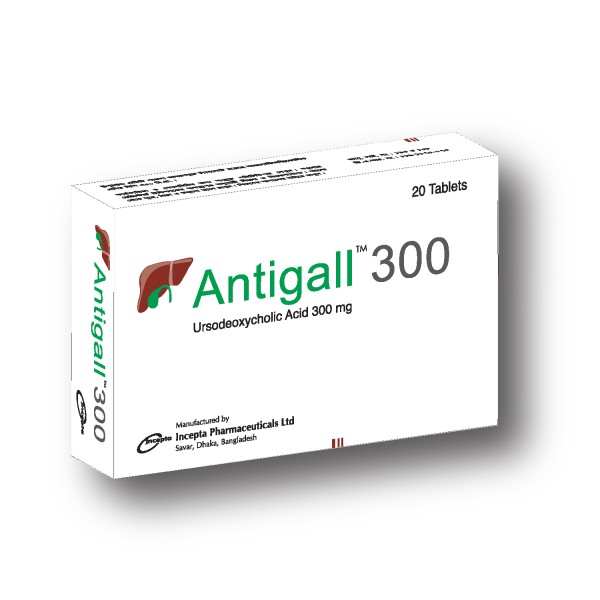
Antigall 300mg Tablet (Ursodeoxycholic Acid)
Manufacturer: Incepta Pharmaceuticals Ltd.
Generic Name: Ursodeoxycholic Acid (UDCA) 300mg
Therapeutic Class: Cholelitholytic Agent / Hepatoprotective / Bile Acid
Price: ৳22.00 per tablet
Indications
Antigall 300mg is indicated for:
- Dissolution of cholesterol gallstones: Non-calcified, radiolucent cholesterol gallstones in patients with a functioning gallbladder who are unwilling or unfit for surgery
- Primary Biliary Cholangitis (PBC): Also known as Primary Biliary Cirrhosis — slows disease progression and reduces liver enzyme elevation
- Non-alcoholic steatohepatitis (NASH) and non-alcoholic fatty liver disease (NAFLD)
- Chronic active hepatitis
- Intrahepatic cholestasis of pregnancy — relieves pruritus and reduces serum bile acids
- Primary sclerosing cholangitis
- Cystic fibrosis-associated liver disease
- Prevention of gallstone recurrence after lithotripsy or surgical stone removal
The 300mg tablet provides a convenient higher-unit-dose formulation for patients requiring standard or high daily doses.
Composition
Each tablet contains: Ursodeoxycholic Acid (UDCA) 300mg
Mechanism of Action
Ursodeoxycholic acid is a naturally occurring hydrophilic bile acid that acts through multiple mechanisms:
- Cholesterol solubilisation: Reduces hepatic cholesterol synthesis and biliary cholesterol secretion; decreases intestinal cholesterol absorption; increases cholesterol solubility in bile — collectively preventing stone formation and promoting dissolution of existing cholesterol gallstones.
- Cytoprotection: Displaces hydrophobic, cytotoxic bile acids (chenodeoxycholic acid, deoxycholic acid) from the enterohepatic circulation, protecting hepatocytes and bile duct epithelial cells from membrane damage.
- Immunomodulation: Reduces aberrant MHC antigen expression on hepatocytes and biliary epithelium — important in autoimmune liver diseases such as PBC.
- Anti-apoptotic: Inhibits bile acid-induced mitochondrial apoptosis in hepatocytes and cholangiocytes.
- Choleretic: Stimulates hepatocyte bile secretion and improves bile flow, reducing intrahepatic cholestasis.
Dosage and Administration
Gallstone dissolution: 8–10 mg/kg/day in 2–3 divided doses with food, or as a single bedtime dose. Typical adult (60–80 kg): 1 tablet (300mg) twice daily, or as directed by the physician. Duration: 6–24 months; reassess by imaging at 6 months.
Primary Biliary Cholangitis (PBC): 13–15 mg/kg/day in divided doses.
NAFLD/NASH: 10–15 mg/kg/day in divided doses.
Intrahepatic cholestasis of pregnancy: 10–15 mg/kg/day in divided doses.
Note: The 300mg tablet is suitable for once- or twice-daily dosing in most adults, reducing pill burden compared to 150mg tablets. Take with food and water. Separate from aluminium hydroxide antacids by at least 2 hours.
Contraindications
- Acute inflammation of the gallbladder or bile ducts
- Frequent biliary colic
- Calcified (radio-opaque) or pigment gallstones
- Non-functioning gallbladder
- Inflammatory bowel disease (Crohn's disease, ulcerative colitis)
- Known hypersensitivity to UDCA or any bile acid
Warnings and Precautions
- Monitor liver function tests (ALT, AST, GGT, ALP) every 4 weeks for the first 3 months, then every 3 months.
- Confirm gallstone type (cholesterol vs. pigment/calcified) by ultrasound or cholecystography before initiating therapy — UDCA is ineffective against calcified stones.
- Perform hepatobiliary imaging every 6 months during gallstone dissolution therapy to assess progress.
- After successful dissolution, gallstone recurrence is common (~50% at 5 years) — discuss maintenance therapy or preventive measures with the physician.
- In advanced cirrhosis, bile acid therapy may precipitate liver decompensation — use with extreme caution.
Side Effects
Common: Diarrhoea (dose-related, particularly at higher doses), nausea, abdominal discomfort or pain.
Uncommon: Urticaria, pruritus, alopecia.
Rare: Calcification of existing gallstones (if non-cholesterol components are present); liver decompensation in pre-existing cirrhosis.
UDCA has an excellent tolerability profile and is significantly better tolerated than chenodeoxycholic acid.
Drug Interactions
- Antacids (aluminium hydroxide) and bile acid sequestrants (cholestyramine, colestipol): Bind UDCA in the intestine and reduce absorption — separate by at least 2 hours.
- Clofibrate, oral contraceptives, oestrogens: Increase biliary cholesterol and may counteract the stone-dissolving effect of UDCA.
- Cyclosporin: UDCA increases cyclosporin intestinal absorption — monitor blood levels and adjust cyclosporin dose if necessary.
- Ciprofibrate: UDCA may increase plasma levels of ciprofibrate.
Use in Pregnancy and Lactation
Pregnancy: UDCA is a first-line treatment for intrahepatic cholestasis of pregnancy (ICP) and has a well-documented safety record in this indication. Use only under physician supervision for other indications during pregnancy.
Lactation: Small amounts may be excreted in breast milk — use with caution and only when clinically necessary.
Storage
Store below 25°C in a dry place, protected from light and moisture. Keep out of reach of children. Do not use after the expiry date printed on the pack.
Pricing
Antigall 300mg Tablet: ৳22.00 per tablet
Disclaimer: This product information is for reference purposes only and does not substitute professional medical advice, diagnosis, or treatment. Always consult a registered physician or qualified healthcare professional before taking any medication.