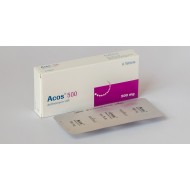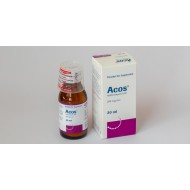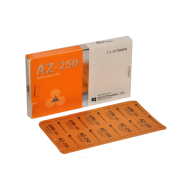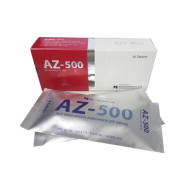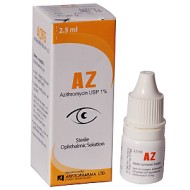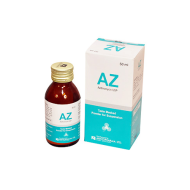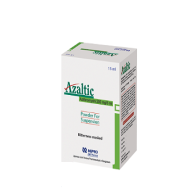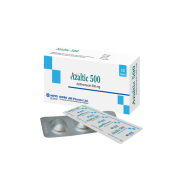
- Stock: In Stock
- Brand: Orion Pharma Limited
- Product ID: Azithromycin
Available Options
🔒 100% Secure Payment | bKash | Nagad | SSLCommerz | COD
⭐ Become a FREE Member: 7% Extra Savings • Free Delivery • Refill Reminders • Priority Support
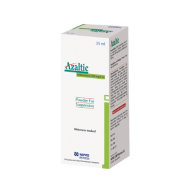
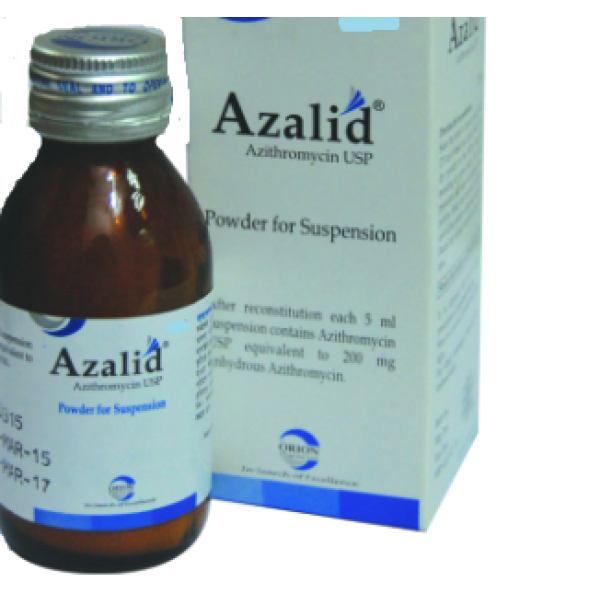
Azalid Suspension — Azithromycin Oral Suspension by Orion Pharma
| Attribute | Details |
|---|---|
| Brand Name | Azalid |
| Generic Name | Azithromycin |
| Dosage Form | Powder for Oral Suspension |
| Drug Class | Macrolide Antibiotic (Azalide) |
| Manufacturer | Orion Pharma Limited, Bangladesh |
| Route of Administration | Oral (suspension, may be taken with food) |
About Azalid Suspension
Azalid Suspension is azithromycin oral suspension manufactured by Orion Pharma Limited, Bangladesh. The suspension formulation is specifically designed to provide azithromycin therapy to patients who cannot swallow solid dosage forms — primarily children, but also elderly patients or adults with dysphagia (difficulty swallowing). The powdered form in the bottle is reconstituted with water immediately before dispensing to produce a stable oral liquid containing azithromycin. The suspension form of azithromycin offers an important practical advantage: unlike azithromycin capsules that must be taken strictly on an empty stomach, azithromycin suspension is not significantly affected by food and can be taken with a meal if desired, making compliance easier particularly in children.
Azithromycin's long tissue half-life (approximately 68 hours) means that even short 3-day or 5-day courses produce sustained therapeutic concentrations in target tissues for 10 days or more — enabling complete treatment of most susceptible bacterial infections with simple once-daily dosing. This prolonged effect is due to the drug's extensive tissue binding, intracellular accumulation in phagocytes, and slow release from tissue reservoirs.
Use in Community-Acquired Pneumonia (CAP) in Children and Adults
Community-acquired pneumonia is one of the leading causes of childhood morbidity and mortality in Bangladesh. Azalid Suspension is an appropriate oral antibiotic for mild-to-moderate CAP when: (a) atypical organisms are suspected (Mycoplasma pneumoniae, Chlamydophila pneumoniae, Legionella) — azithromycin is the treatment of choice as beta-lactams have no activity against atypical pathogens; (b) the patient is penicillin-allergic; (c) an oral macrolide is preferred alongside a beta-lactam for dual atypical coverage. Standard paediatric dosing for CAP: 10mg/kg once daily for 3–5 days (maximum 500mg/day). Azithromycin suspension is not appropriate as monotherapy for moderate-to-severe or hospitalised childhood pneumonia, which typically requires parenteral antibiotics and broader-spectrum coverage.
Pertussis (Whooping Cough) — An Important Bangladesh Indication
Bordetella pertussis remains an important pathogen in Bangladesh, causing whooping cough particularly in unvaccinated or incompletely vaccinated children. Azithromycin is the preferred treatment for pertussis across all age groups due to its once-daily dosing, excellent tolerability compared to erythromycin, and high efficacy against Bordetella pertussis. Azalid Suspension is the ideal pertussis treatment vehicle for infants and young children who cannot swallow tablets. Dosing: infants and children — azithromycin 10mg/kg/day once daily for 5 days. Post-exposure prophylaxis for household contacts of confirmed pertussis cases: same 5-day regimen. Antibiotic treatment is most effective in the early catarrhal phase; in the paroxysmal phase, treatment reduces transmission to others even if symptoms are not significantly shortened.
Azithromycin Suspension in Typhoid Fever
Azithromycin suspension is an oral treatment option for uncomplicated typhoid fever in children in Bangladesh, particularly valuable given rising fluoroquinolone and third-generation cephalosporin resistance in Salmonella typhi. WHO guidelines recommend azithromycin 10–20 mg/kg/day (maximum 1g/day) orally for 7 days for uncomplicated typhoid. Azalid Suspension provides an easy-to-dose, well-tolerated oral azithromycin formulation that achieves clinical cure rates of 88–96% for uncomplicated typhoid fever in children. Azithromycin maintains activity against most multi-drug resistant (MDR) and extensively drug-resistant (XDR) S. typhi strains documented in Bangladesh and South Asia, making it one of the few reliable oral treatments for these resistant strains.
Drug Interactions and Contraindications
The interaction and contraindication profile of Azalid Suspension is identical to other azithromycin formulations. Key interactions: antacids (aluminium/magnesium hydroxide) — reduce azithromycin peak concentration by ~24%; separate by 2 hours; warfarin — possible potentiation of anticoagulant effect; monitor INR; nelfinavir (HIV antiretroviral) — increases azithromycin exposure by 113%; monitor for azithromycin-related side effects (hearing loss, liver enzyme elevations); ergot alkaloids — avoid concurrent use. Contraindications: hypersensitivity to azithromycin, erythromycin, or other macrolides; severe hepatic impairment (Child-Pugh C); history of cholestatic jaundice or hepatic dysfunction with prior azithromycin use. Use with caution in patients with QT prolongation risk factors or cardiac rhythm disorders.
Frequently Asked Questions (FAQ)
Q1: How should Azalid Suspension be stored after opening and mixing?
Once reconstituted (mixed with water), Azalid Suspension should be stored at room temperature or preferably in the refrigerator (2–8°C). Do not freeze. The reconstituted suspension is stable for up to 10 days — discard any remaining suspension after 10 days even if it appears normal. Always shake the bottle well before measuring each dose, as the particles settle on standing. Store the dry powder before reconstitution at temperatures below 30°C in a dry location away from direct sunlight.
Q2: Can Azalid Suspension be used for infants under 6 months old?
Azithromycin suspension can be used in infants under 6 months for specific indications (particularly pertussis), but this is an off-label use for some indications. In neonates and young infants under 6 weeks, there is an association between macrolide use and hypertrophic pyloric stenosis (HPS) — a condition causing projectile vomiting due to narrowing of the stomach outlet. The benefits versus risks must be carefully weighed by a paediatric specialist. For neonatal pertussis, azithromycin remains recommended despite this risk because the benefit of treating a potentially fatal infection outweighs the HPS risk.
Q3: My child has been prescribed Azalid Suspension but is also taking another antibiotic — is this safe?
Combination antibiotic use should only be prescribed by a physician who knows all medications the child is taking. There are no absolute contraindications to combining azithromycin with most other antibiotics. Common combinations used in clinical practice include: azithromycin plus amoxicillin or ampicillin for severe CAP (dual atypical and typical coverage); azithromycin plus ceftriaxone for hospitalised pneumonia. However, azithromycin should not be combined with clarithromycin or erythromycin (same class, no benefit and increased side effect risk) or with other QT-prolonging antibiotics (fluoroquinolones) without careful physician oversight.
Q4: Is it normal for the Azalid Suspension to change colour after mixing?
The reconstituted suspension typically has a characteristic colour (usually pink, orange, or white depending on the formulation's added flavourings). The colour may darken slightly over the storage period — this is normal and does not indicate spoilage. However, if the suspension develops an unusual smell, shows visible mould, or forms clumps that don't disperse on shaking, discard it and contact your pharmacist for a replacement. Changes in appearance after 10 days of reconstitution are expected — the product should not be used beyond 10 days regardless.
Medical Disclaimer: Azalid Suspension information is for educational and healthcare professional reference. Paediatric antibiotic dosing must be prescribed by a qualified physician. Accurate weight-based dosing using a calibrated oral syringe is essential for safe paediatric therapy. Antibiotic overuse contributes to resistance.