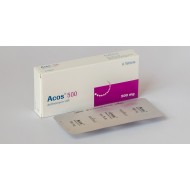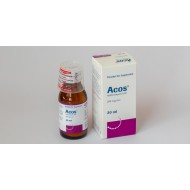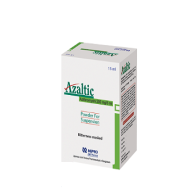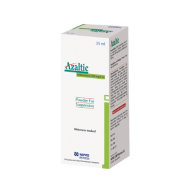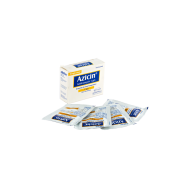

- Stock: Pre-Order
- Brand: Opsonin Pharma Limited
- Product ID: Azithromycin
🔒 100% Secure Payment | bKash | Nagad | SSLCommerz | COD
⭐ Become a FREE Member: 7% Extra Savings • Free Delivery • Refill Reminders • Priority Support
This Item is for pre order
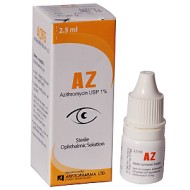
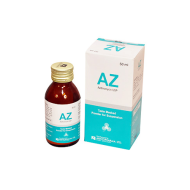
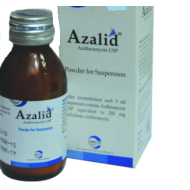
Azicin 20ml Suspension — Azithromycin 200mg/5ml for Paediatric Infections
| Attribute | Details |
|---|---|
| Brand Name | Azicin |
| Generic Name | Azithromycin |
| Strength | 200 mg / 5 mL |
| Dosage Form | Oral Suspension (after reconstitution) |
| Pack Size | 20 mL bottle |
| Drug Class | Macrolide Antibiotic |
| Manufacturer | Opsonin Pharma Limited, Bangladesh |
| Route of Administration | Oral |
About Azicin 20ml Suspension
Azicin 20ml Suspension is an oral suspension of azithromycin 200 mg per 5 mL, manufactured by Opsonin Pharma Limited, Bangladesh. The 20 mL pack size provides a total of 800 mg azithromycin in 20 mL of reconstituted suspension — sufficient for a complete 3-day treatment course for a child weighing approximately 13–16 kg (at the standard 10 mg/kg/day dose), or a 5-day course for a smaller child. The suspension formulation enables precise weight-based dosing for paediatric patients and is preferred for children who cannot swallow tablets. Azithromycin suspension is particularly valuable in the paediatric population because its once-daily dosing, short 3–5 day course, and acceptable palatability ensure far higher adherence compared with twice-daily amoxicillin or four-times-daily cotrimoxazole regimens used for the same indications.
Paediatric Indications
Community-acquired pneumonia (CAP): Azithromycin is effective against typical (Streptococcus pneumoniae, H. influenzae) and atypical (Mycoplasma pneumoniae, Chlamydophila pneumoniae) causes of paediatric CAP — an advantage over beta-lactams, which miss atypical pathogens. In school-aged children (5–15 years), Mycoplasma pneumoniae accounts for up to 40% of CAP, making azithromycin particularly suitable. Dosage: 10 mg/kg once daily for 3–5 days. Pharyngotonsillitis: For penicillin-allergic patients, azithromycin 12 mg/kg/day for 5 days is an effective alternative to penicillin for group A streptococcal pharyngitis. Acute otitis media (AOM): Azithromycin provides a convenient single-agent option for AOM, especially in penicillin-allergic children. Skin and soft tissue infections: Effective against Staphylococcus aureus and Streptococcus pyogenes. Typhoid fever: Azithromycin is increasingly used for enteric fever in children given widespread fluoroquinolone resistance and the safety profile advantage over ciprofloxacin in young children.
Weight-Based Dosing Table
For Azicin 200mg/5mL suspension at standard 10 mg/kg/day dosing:
| Weight | Daily Dose (mg) | Volume of 200mg/5mL susp | 3-day course total |
|---|---|---|---|
| 5 kg | 50 mg | 1.25 mL | 3.75 mL |
| 8 kg | 80 mg | 2 mL | 6 mL |
| 10 kg | 100 mg | 2.5 mL | 7.5 mL |
| 12 kg | 120 mg | 3 mL | 9 mL |
| 15 kg | 150 mg | 3.75 mL | 11.25 mL |
| 20 kg | 200 mg | 5 mL | 15 mL |
Maximum paediatric dose: 500 mg/day (same as adult dose). Children above 45–50 kg may use the adult tablet/capsule formulation.
Reconstitution and Storage
Azicin suspension is supplied as dry granules/powder that require reconstitution with water before use. Reconstitution: Add the specified volume of clean water to the bottle as directed on the label (typically 20 mL of water to reach the 20 mL fill volume after reconstitution). Replace the cap and shake vigorously until all powder is dissolved. Allow to stand for 5 minutes then shake again before first use. Storage after reconstitution: Store at room temperature (below 30°C); do not refrigerate (crystallisation may alter dosing accuracy). Discard any unused suspension after 10 days — do not use beyond this period. Shake well immediately before each use as the suspension sediments on standing. Use the graduated oral syringe or measuring spoon supplied to measure doses accurately — household teaspoons are inaccurate for paediatric medication dosing.
Azithromycin in Diabetic Children and Adolescents
Children and adolescents with type 1 or type 2 diabetes mellitus are susceptible to the same infections as non-diabetic children, but infections may be more severe or slower to resolve due to impaired immunity and reduced neutrophil function. Azithromycin suspension is well suited for managing respiratory tract infections, skin infections, and pharyngitis in diabetic children because: it does not affect blood glucose directly; it does not interact with insulin or metformin; once-daily dosing reduces the treatment burden on already complex daily routines involving blood glucose monitoring and insulin administration; and the short 3–5 day course limits disruption to diabetic management. Parents should be counselled that significant illness (including bacterial infections) typically increases insulin requirements due to counter-regulatory hormone release — more frequent blood glucose monitoring is essential during treatment.
Frequently Asked Questions (FAQ)
Q1: How many days of Azicin suspension are needed for a child's chest infection?
For community-acquired pneumonia (chest infection) in children, Azicin 200mg/5mL suspension is typically given for 3–5 days at 10 mg/kg/day once daily. Clinical guidelines for mild-to-moderate paediatric CAP recommend a 3-day course, which is as effective as 5-day courses for most typical presentations. For Mycoplasma pneumoniae (atypical pneumonia, common in school-aged children), 5 days may be preferred. Severe pneumonia, or pneumonia with complications, requires hospitalisation and intravenous antibiotics regardless of the agent. Your child's physician will determine the appropriate duration based on clinical severity.
Q2: Is the 20mL bottle enough for a full course of treatment?
It depends on the child's weight. A 20mL bottle contains 800mg total azithromycin. At 10mg/kg/day: a 3-day course for a 20kg child requires 3 × 200mg = 600mg (15mL) — the 20mL bottle is sufficient with approximately 5mL leftover. For a 27kg child (270mg/day × 3 days = 810mg needed), the 20mL bottle is just barely sufficient; the 35mL bottle would be more appropriate. Always calculate the dose and total volume needed for the prescribed course before dispensing to ensure the bottle size is adequate.
Q3: Can Azicin suspension be given with food to a child?
Yes — Azicin 200mg/5mL suspension can be given with or without food. Food does not significantly affect the bioavailability of azithromycin suspension. If the child experiences nausea or abdominal discomfort after doses, administering with food or a light snack may help reduce this. However, avoid giving immediately after a very large fatty meal. Do not mix the suspension into the child's food — the dose should be given by oral syringe directly into the mouth or into a small amount of liquid for the child to drink, to ensure the complete dose is consumed.
Q4: What if my child vomits after taking Azicin suspension?
If vomiting occurs within 30 minutes of the dose, a repeat dose should be given as soon as the child is settled. If vomiting occurs 30–60 minutes after the dose, the situation is less clear — contact your physician, as absorption may be adequate at 30–60 minutes. Vomiting more than 60 minutes after the dose means the drug was likely absorbed and a repeat dose is not needed. Mild nausea without vomiting does not affect absorption. If vomiting is persistent and the child cannot retain any oral medication, medical assessment is needed. Administering azithromycin suspension with food can reduce the frequency of dose-related nausea and vomiting.
Medical Disclaimer: Azicin 20ml Suspension dosing for children must be weight-based and prescribed by a physician or qualified healthcare professional. Do not estimate doses by age alone. Ensure correct reconstitution and use a calibrated oral syringe for accurate measurement. If a child's condition does not improve within 48–72 hours of starting treatment, physician reassessment is required.