
🔒 100% Secure Payment | bKash | Nagad | SSLCommerz | COD
⭐ Become a FREE Member: 7% Extra Savings • Free Delivery • Refill Reminders • Priority Support
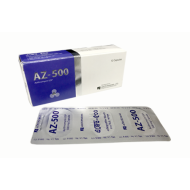
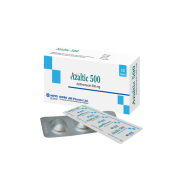
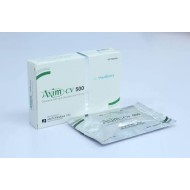
Azilab 500 — Azithromycin 500mg Tablet by Labaid Pharma
| Attribute | Details |
|---|---|
| Brand Name | Azilab 500 |
| Generic Name | Azithromycin |
| Strength | 500 mg |
| Dosage Form | Tablet |
| Drug Class | Macrolide Antibiotic (Azalide) |
| Manufacturer | Labaid Pharma Ltd., Bangladesh |
| Route of Administration | Oral |
About Azilab 500
Azilab 500 is an azithromycin 500 mg tablet manufactured by Labaid Pharma Ltd., Bangladesh. Azithromycin belongs to the azalide subclass of macrolide antibiotics, derived from erythromycin by insertion of a nitrogen atom into the macrolide ring — a structural modification that dramatically improves acid stability, tissue penetration, and pharmacokinetic profile compared to erythromycin. Azilab 500 provides the 500mg dose used for the standard short 3-day azithromycin course for community-acquired infections and also enables single-dose 1g regimens (two tablets) for sexually transmitted infections and traveller's diarrhoea. Labaid Pharma Ltd. is a well-established pharmaceutical manufacturer in Bangladesh, and Azilab 500 is produced under GMP-compliant manufacturing standards.
Mechanism of Action
Azithromycin inhibits bacterial protein synthesis by binding reversibly to the 50S ribosomal subunit at the peptide exit tunnel, blocking translocation of the growing peptide chain and preventing the addition of new amino acids. This results in bacteriostatic activity against most susceptible organisms, with bactericidal activity at higher concentrations against some pathogens. A key feature distinguishing azithromycin from earlier macrolides is its exceptional ability to concentrate in tissues and within phagocytic cells (macrophages and neutrophils): tissue concentrations reach 10–100 times simultaneous plasma concentrations, and neutrophil azithromycin concentrations can exceed plasma levels by 200–500 fold. This intracellular accumulation enables azithromycin to kill intracellular pathogens (Chlamydia trachomatis, Legionella pneumophila, Mycobacterium avium) that are inaccessible to many other antibiotics. The long tissue half-life (68 hours) enables once-daily dosing and short 3-day courses while maintaining therapeutic tissue concentrations for 7–10 days after the last dose.
Key Clinical Indications
Community-acquired pneumonia (CAP): Azilab 500 covers both typical (Streptococcus pneumoniae, Haemophilus influenzae) and atypical (Mycoplasma pneumoniae, Chlamydophila pneumoniae, Legionella pneumophila) causes of CAP — a unique advantage among commonly used antibiotics, as beta-lactams (amoxicillin, amoxicillin-clavulanate) miss atypical pathogens. The 3-day regimen (500mg once daily for 3 days) is preferred for adherence and patient convenience. Pharyngotonsillitis: effective alternative to penicillin in penicillin-allergic patients for group A streptococcal pharyngitis; 5-day regimen (500mg Day 1, then 250mg Days 2–5) or 3-day 500mg course used. Acute bacterial sinusitis: 3-day 500mg course for penicillin-allergic patients or where amoxicillin-clavulanate is unavailable. Skin and soft tissue infections: effective for uncomplicated cellulitis and impetigo caused by gram-positive cocci. Typhoid fever: 20mg/kg/day (maximum 1g) for 5–7 days for uncomplicated enteric fever. Chlamydial STI: two tablets simultaneously (1g single dose) for uncomplicated genital chlamydia.
Azithromycin in Diabetic Infection Management
Diabetes mellitus creates a state of immune compromise that increases susceptibility to both common and opportunistic infections. The most clinically relevant infections in diabetic patients where azithromycin plays a role include: respiratory tract infections (community-acquired pneumonia, acute bronchitis), where the 3-day once-daily Azilab 500 regimen is adherence-optimal for patients already managing multiple medications; skin and soft tissue infections, where azithromycin's gram-positive coverage addresses streptococcal and some staphylococcal cellulitis; and otitis media/sinusitis in diabetic patients with penicillin allergy. Azithromycin's anti-inflammatory properties (independent of its antibacterial activity) — inhibition of neutrophil activation, reduction of pro-inflammatory cytokine production, reduction of reactive oxygen species — may provide additional benefit in diabetic patients who have baseline chronic low-grade inflammation contributing to their metabolic dysfunction. There are no clinically significant pharmacokinetic interactions between azithromycin and the common antidiabetic agents (metformin, insulin, sulfonylureas, DPP-4 inhibitors).
Resistance and Antimicrobial Stewardship
Macrolide resistance in respiratory pathogens is an increasing global concern, including in Bangladesh. Resistance mechanisms include: ribosomal methylation (erm genes), macrolide efflux pumps (mef genes), and ribosomal mutations. In Bangladesh, Streptococcus pneumoniae macrolide resistance rates of 10–30% have been reported in some surveillance studies; however, azithromycin's very high tissue concentrations (often 100-fold above the MIC for susceptible organisms) provide a pharmacodynamic advantage that partially mitigates clinical failure despite in-vitro resistance at standard MIC breakpoints. Nevertheless, responsible use of Azilab 500 is important: restrict to confirmed or strongly suspected bacterial infections; avoid use for viral URTIs (common cold, influenza); complete the full prescribed course; do not save or share antibiotics.
Frequently Asked Questions (FAQ)
Q1: Is Azilab 500 the same as azithromycin from other brands?
Yes — Azilab 500 contains the same active ingredient (azithromycin 500mg) as other azithromycin 500mg brands available in Bangladesh. All azithromycin 500mg tablets from licensed manufacturers are required to meet bioequivalence standards ensuring the same rate and extent of drug absorption as the reference product. Differences between brands are limited to inactive excipients (fillers, coatings), packaging, and price. There is no clinically meaningful difference in efficacy or safety between azithromycin 500mg tablets from different licensed Bangladeshi manufacturers, including Labaid Pharma's Azilab 500.
Q2: How does Azilab 500 work for chest infections?
Azilab 500 (azithromycin) kills the bacteria causing chest infections by blocking bacterial protein synthesis at the ribosome level. After a single 500mg dose, azithromycin distributes rapidly into lung tissue — achieving lung concentrations 100 times higher than in the bloodstream — where it remains for 5–7 days. This means the antibiotic continues working in the lungs for up to a week after you take the last tablet of a 3-day course, providing approximately 10 days of effective antibacterial activity. In addition to killing bacteria directly, azithromycin reduces airway inflammation by suppressing inflammatory mediators, which helps relieve symptoms (cough, mucus) independently of its antibiotic action.
Q3: Can Azilab 500 be used for food poisoning or stomach infection?
Azithromycin 500mg has specific roles in treating bacterial gastrointestinal infections. For traveller's diarrhoea — particularly the watery diarrhoea common in travellers to Bangladesh from non-endemic regions, or Bangladeshis eating outside familiar food environments — azithromycin 1g single dose (two tablets at once) or 500mg daily for 3 days is effective against the main bacterial causes including quinolone-resistant Campylobacter and enterotoxigenic E. coli. For typhoid fever (enteric fever with fever, abdominal symptoms, bacteraemia), azithromycin 1g/day for 5–7 days is increasingly used as fluoroquinolone resistance spreads. Azithromycin is NOT effective against viral gastroenteritis (the most common cause of sudden-onset vomiting and diarrhoea), for which antibiotics are ineffective and unnecessary.
Q4: What is the correct way to store Azilab 500 tablets?
Store Azilab 500 tablets at room temperature, below 30°C. Keep in the original blister pack or container, away from direct sunlight, moisture, and heat. Bangladesh's tropical climate (high humidity and temperatures) can accelerate tablet degradation if stored improperly — do not leave tablets in a car glove compartment, near a kitchen stove, or in a bathroom where steam exposure is frequent. Keep out of reach of children. Do not use beyond the printed expiry date. Unused tablets from a completed course should be disposed of appropriately — do not save for future use, as self-medicating with leftover antibiotics contributes to antibiotic resistance.
Medical Disclaimer: Azilab 500 is a prescription antibiotic. Self-diagnosis and antibiotic self-prescription are strongly discouraged. Inappropriate antibiotic use is the primary driver of antibiotic resistance, which represents a major public health threat in Bangladesh. Use only under physician guidance with a valid prescription.