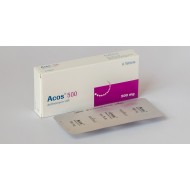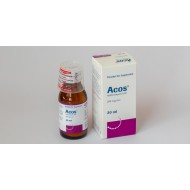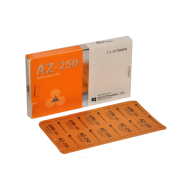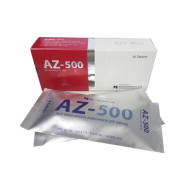
- Stock: 2-3 Days
- Brand: Drug International Limited
- Product ID: Azithromycin
🔒 100% Secure Payment | bKash | Nagad | SSLCommerz | COD
⭐ Become a FREE Member: 7% Extra Savings • Free Delivery • Refill Reminders • Priority Support
This Item is for pre order
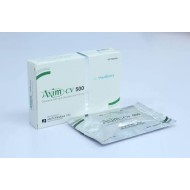
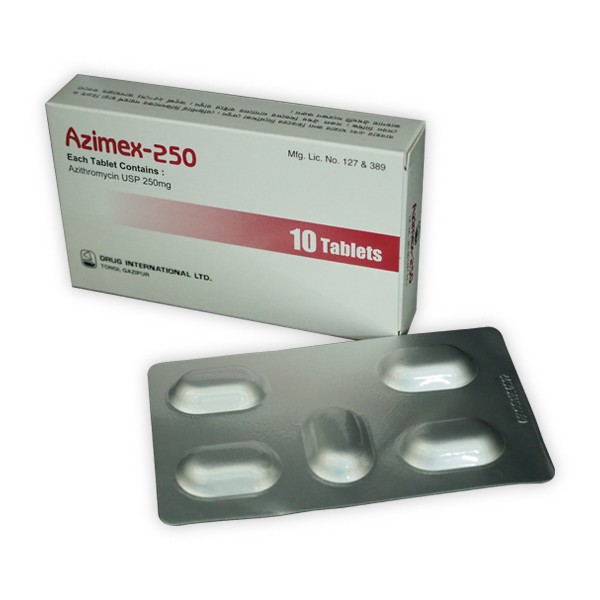
Azimex 250 Tab — Azithromycin 250mg by Square Pharmaceuticals
| Attribute | Details |
|---|---|
| Brand Name | Azimex |
| Generic Name | Azithromycin |
| Strength | 250 mg |
| Dosage Form | Tablet |
| Drug Class | Macrolide Antibiotic (Azalide) |
| Manufacturer | Square Pharmaceuticals Ltd., Bangladesh |
| Route of Administration | Oral |
About Azimex 250 Tab
Azimex 250 Tab contains azithromycin 250 mg per tablet, manufactured by Square Pharmaceuticals Ltd., Bangladesh. Square is Bangladesh's leading pharmaceutical company, producing Azimex to international GMP standards with WHO, TGA (Australia), and EU-GMP certifications. The 250mg tablet is the core unit dose for the classic 5-day azithromycin regimen (two tablets as a 500mg loading dose on Day 1, followed by one tablet daily on Days 2–5). This well-established protocol has been the basis of azithromycin's widespread clinical adoption since the 1990s and remains preferred by many physicians and patients who are familiar with the 5-day course — particularly for upper respiratory tract infections, pharyngotonsillitis, and mild community-acquired pneumonia in ambulatory adults and older adolescents.
5-Day Regimen — Clinical Protocol
The 5-day azithromycin course with 250mg tablets follows a simple step-down pattern designed to achieve rapid tissue saturation followed by sustained bacterial suppression. Day 1 (Loading Dose): Two Azimex 250 tablets (500mg) taken together, ideally on an empty stomach (1–2 hours before food or 2 hours after eating) to achieve maximum peak concentration for rapid tissue loading. Days 2–5 (Maintenance): One Azimex 250 tablet (250mg) once daily, preferably at the same time each day to maintain consistent dosing intervals. Total course: 6 tablets, 1500 mg azithromycin. The loading dose achieves saturating tissue concentrations within 2–4 hours — reaching lung, tonsil, and sinus mucosal concentrations 10–100 times the plasma concentration. The subsequent daily 250mg doses maintain tissue levels, while azithromycin's 68-hour tissue half-life ensures therapeutic concentrations persist for 5–7 days after the last tablet, providing 10+ days of total antibacterial activity from a 5-day course.
Upper Respiratory Tract Infection Management
Upper respiratory tract infections (URTIs) are the most common reason for physician consultation and antibiotic prescribing in Bangladesh. Most URTIs are viral (rhinovirus, influenza, coronavirus, adenovirus) and do not require antibiotics — prescribing antibiotics for viral URTIs is a major driver of antibiotic resistance in Bangladesh. However, secondary bacterial URTIs — pharyngotonsillitis caused by Streptococcus pyogenes (Group A Strep), acute bacterial rhinosinusitis (H. influenzae, S. pneumoniae, Moraxella catarrhalis), and acute otitis media — do benefit from antibiotic treatment. Azimex 250 Tab is an appropriate agent for bacterial pharyngotonsillitis (penicillin-allergic patients), acute bacterial sinusitis (penicillin-allergic or amoxicillin-resistant), and acute otitis media. The key prescribing principle: confirm or strongly suspect bacterial aetiology before prescribing — a febrile patient with exudative tonsillar inflammation and tender cervical lymph nodes has a high Centor/McIsaac score and likely bacterial pharyngitis warranting antibiotic therapy; a patient with 3 days of runny nose and mild sore throat likely has a viral URTI that will not benefit from azithromycin.
Azithromycin's Anti-Inflammatory Mechanisms
Beyond its antibacterial activity, azithromycin has significant immunomodulatory and anti-inflammatory effects that are relevant to its clinical efficacy. These non-antibiotic properties include: suppression of neutrophil-mediated inflammatory cytokine production (IL-8, TNF-α, IL-6); reduction of reactive oxygen species generation by activated neutrophils; inhibition of mucus hypersecretion by bronchial epithelial cells; and promotion of macrophage phagocytic activity. These effects contribute to the superior symptom resolution observed with azithromycin compared with other antibiotics in clinical trials even when accounting for antibacterial activity alone. In diabetic patients with baseline chronic inflammatory states (elevated CRP, IL-6), azithromycin's anti-inflammatory properties may provide additional symptomatic benefit during acute respiratory infections, partly explaining why diabetic patients sometimes report more rapid subjective improvement with azithromycin than with beta-lactam antibiotics with equivalent antibacterial coverage.
Frequently Asked Questions (FAQ)
Q1: Is Azimex 250 Tab manufactured by Square Pharmaceuticals safe and effective?
Yes — Square Pharmaceuticals is Bangladesh's largest pharmaceutical company with WHO-GMP, Australian TGA, and EU-GMP manufacturing certifications. Azimex 250 Tab is produced under these rigorous international quality standards, ensuring consistent active ingredient content, dissolution profile, and bioavailability. Square Pharmaceuticals exports to over 40 countries — including developed markets with stringent regulatory requirements — providing independent evidence of their manufacturing quality. Azimex 250 Tab is as clinically effective as azithromycin 250mg from any other reputable licensed manufacturer.
Q2: Why does the first day of Azimex 250 require two tablets?
The Day 1 loading dose of two tablets (500mg) is pharmacokinetically essential. Azithromycin distributes very rapidly from blood into tissues — within hours of the first dose, blood levels fall to low concentrations while tissue concentrations soar to 10–100 times the blood level. To saturate tissue-binding sites quickly (achieving therapeutic concentrations within hours rather than days), the higher 500mg loading dose is needed on Day 1. Without this loading dose, it would take 3–4 days to reach stable therapeutic tissue concentrations through daily 250mg dosing alone. The subsequent lower 250mg maintenance doses sustain tissue levels efficiently, leveraging azithromycin's long 68-hour tissue half-life. This loading dose strategy also explains why azithromycin achieves faster clinical response than many other antibiotics.
Q3: Can Azimex 250 Tab be split in half for children?
Tablets should not routinely be split unless the manufacturer specifically indicates scored tablets with a breakline and confirmed dose accuracy of halved portions. Splitting unscored tablets risks inaccurate dosing (one half may contain significantly more or less than 125mg) and may damage any film coating protecting the tablet. For children requiring doses below 250mg, azithromycin oral suspension (Azimex 15ml, 30ml, or 50ml at 200mg/5mL) provides accurate weight-based dosing with a proper liquid formulation. Children above 45–50 kg can generally use adult tablet doses (250mg or 500mg) without the need for suspension.
Q4: How does Azimex 250 compare with clarithromycin for respiratory infections?
Azimex 250 (azithromycin) and clarithromycin are both macrolide antibiotics with overlapping indications for respiratory infections, but with important practical differences. Azimex: once daily, 3–5 day course, can be taken with or without food (tablet), better H. influenzae activity, fewer drug-drug interactions at standard doses. Clarithromycin: twice daily, 7–14 day course, multiple drug interactions via CYP3A4 inhibition (significant interactions with statins, warfarin, some antidiabetic agents including repaglinide), better H. pylori activity. For most outpatient respiratory infections in Bangladesh, azithromycin 250mg provides equivalent or superior clinical outcomes with substantially better convenience, tolerability, and safety profile than clarithromycin.
Medical Disclaimer: Azimex 250 Tab requires a valid prescription. Antibiotic use for viral respiratory infections is inappropriate and contributes to antibiotic resistance — consult a physician who can determine whether your symptoms indicate a bacterial infection requiring treatment.