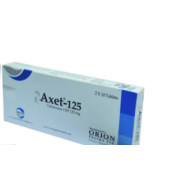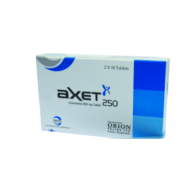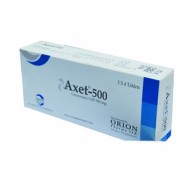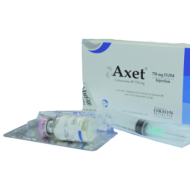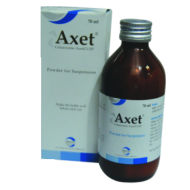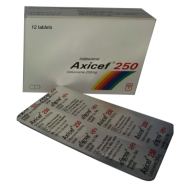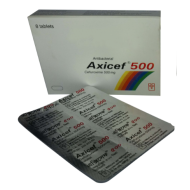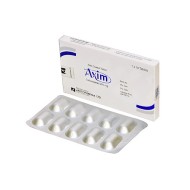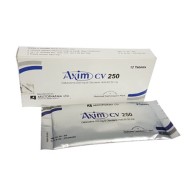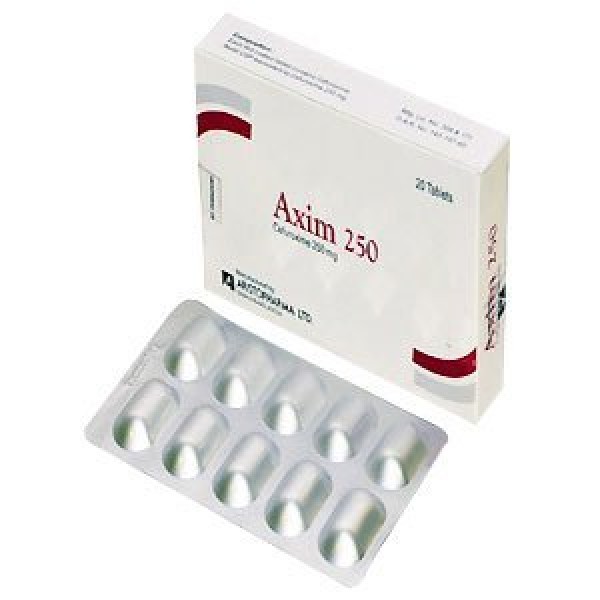
- Stock: In Stock
- Brand: Aristopharma
- Product ID: Cefuroxime Axetil
Available Options
🔒 100% Secure Payment | bKash | Nagad | SSLCommerz | COD
⭐ Become a FREE Member: 7% Extra Savings • Free Delivery • Refill Reminders • Priority Support
This Item is for pre order
Axim 250 mg Tablet (Cefuroxime Axetil) — Clinical Overview
| Brand Name | Axim 250 mg Tab |
|---|---|
| Generic Name | Cefuroxime Axetil |
| Manufacturer | ACI Limited, Bangladesh |
| Strength | 250 mg per tablet |
| Dosage Form | Film-coated Tablet |
| Pack Size | 10 tablets per strip |
| Drug Class | Second-generation Cephalosporin (Beta-lactam Antibiotic) |
| Prescription Status | Prescription Only Medicine (POM) |
What is Axim 250 mg Tab?
Axim 250 mg Tab is an oral antibiotic from ACI Limited, one of Bangladesh's leading pharmaceutical manufacturers. The active substance, cefuroxime axetil, is a second-generation cephalosporin — part of the beta-lactam antibiotic class. As a prodrug ester, cefuroxime axetil is converted to its active form (cefuroxime) after absorption through the intestinal wall, enabling effective systemic antibiotic concentrations from an oral dose.
Axim is available in both oral forms (tablets, suspension) and injectable forms (cefuroxime sodium), making it one of ACI's most versatile antibiotic brands across hospital and community settings.
Antimicrobial Spectrum of Cefuroxime
Cefuroxime's bactericidal spectrum covers a clinically important range of pathogens:
- Gram-positive organisms: Streptococcus pyogenes (Group A Strep), Streptococcus pneumoniae (non-PRSP strains), Staphylococcus aureus (MSSA only — not MRSA)
- Gram-negative organisms: Haemophilus influenzae (including beta-lactamase-producing strains), Moraxella catarrhalis, Escherichia coli, Klebsiella pneumoniae, Proteus mirabilis
- Resistant organisms (not covered): MRSA, Pseudomonas aeruginosa, Enterococcus faecalis, atypical pathogens (Mycoplasma, Legionella, Chlamydophila)
This spectrum makes cefuroxime axetil well-suited for community-acquired respiratory and urinary infections where E. coli, H. influenzae, and Streptococcus species predominate.
Mechanism of Action
Cefuroxime kills susceptible bacteria by irreversibly binding to penicillin-binding proteins (PBPs) — the enzyme complexes required for bacterial cell wall synthesis. Blocking PBPs prevents peptidoglycan cross-linking, causing structural weakness and osmotic lysis of the bacterial cell. Cefuroxime also exhibits relative stability against many plasmid-mediated beta-lactamases produced by H. influenzae and M. catarrhalis, which distinguishes it from first-generation agents like cefalexin.
Cefuroxime is a time-dependent antibiotic: antibacterial efficacy correlates with the proportion of the dosing interval during which free drug concentrations exceed the MIC, not peak concentration. Twice-daily dosing maintains effective tissue levels throughout the day.
Clinical Indications
Axim 250 mg is indicated for mild to moderate bacterial infections:
- Urinary tract infections (UTIs): Uncomplicated cystitis caused by E. coli, Klebsiella, or Proteus mirabilis
- Respiratory tract infections: Acute sinusitis, pharyngitis/tonsillitis, acute exacerbations of chronic bronchitis (AECB), mild community-acquired pneumonia
- Skin and soft tissue infections: Wound infections, cellulitis, impetigo due to susceptible S. aureus (MSSA) or Streptococcus
- Otitis media: Acute bacterial middle ear infections in children and adults
- Early Lyme disease: Erythema migrans (first-stage Lyme borreliosis)
Urinary Tract Infections in Diabetes — Special Relevance
UTIs are significantly more prevalent and more severe in patients with diabetes mellitus. Glycosuria (glucose in urine from hyperglycaemia) creates a rich bacterial growth medium, while autonomic neuropathy causes incomplete bladder emptying (neurogenic bladder), allowing bacteria to colonise stagnant urine. Additionally, impaired neutrophil function reduces the body's ability to clear urinary pathogens.
- All UTIs in diabetics are classified as "complicated" by infectious disease guidelines — even when symptoms appear mild — because of the higher risk of pyelonephritis (kidney infection), bacteraemia, and emphysematous pyelonephritis.
- E. coli remains the most common UTI pathogen in diabetics (~70–80% of cases), followed by Klebsiella pneumoniae. Cefuroxime axetil covers both organisms effectively.
- Treatment duration for UTIs in diabetics should be 7–14 days rather than the 3-day courses used in otherwise healthy women, due to the higher risk of treatment failure and relapse.
- Culture-guided therapy is strongly preferred in diabetic UTIs to detect ESBL-producing organisms (which are resistant to cefuroxime) or unusual pathogens requiring different antibiotics.
Dosage and Administration
Always follow the prescribing doctor's instructions. Standard adult dosing guidelines:
- Uncomplicated UTI: 250 mg twice daily × 7 days (minimum in diabetics; may extend to 14 days)
- Pharyngitis / tonsillitis: 250 mg twice daily × 10 days
- Sinusitis / AECB: 250–500 mg twice daily × 5–10 days
- Skin / soft tissue infections: 250 mg twice daily × 7–14 days
- Early Lyme disease: 500 mg twice daily × 20 days
Take with food — bioavailability increases by ~40% in the fed state. Swallow tablets whole. Complete the full prescribed course. Do not share antibiotics.
Pharmacokinetics and Renal Dosing
Key pharmacokinetic data for cefuroxime axetil:
- Bioavailability: ~52% (fed) vs ~37% (fasted) — food effect is clinically significant
- Tmax: 2–3 hours after oral dosing
- Protein binding: 33–50% — moderate binding, wide tissue distribution
- Elimination: Primarily renal tubular secretion; urinary concentrations are high, supporting UTI treatment
- Half-life: ~1.2–1.7 hours (normal renal function)
- Renal impairment adjustment: CrCl 10–30 mL/min: 250 mg twice daily; CrCl <10 mL/min: 250 mg once daily. Dialysis patients: dose after each dialysis session. This is particularly relevant for diabetic patients with nephropathy.
Drug Interactions
- Probenecid: Blocks renal tubular secretion of cefuroxime, raising plasma levels — dose reduction may be needed
- PPIs / H2-blockers / antacids: Elevate gastric pH, reducing cefuroxime axetil absorption; take cefuroxime with a meal to partially offset this effect
- Warfarin / acenocoumarol: Cefuroxime may prolong prothrombin time; monitor INR closely
- Oral contraceptives: Antibiotic gut flora disruption may reduce efficacy; use barrier contraception during treatment
- Metformin: No direct pharmacokinetic interaction; however, if infection causes acute kidney injury (AKI), metformin should be held to avoid lactic acidosis risk — reassess after recovery
- Nephrotoxic drugs: Monitor renal function when combining with NSAIDs, aminoglycosides, or contrast agents
Side Effects
- Common: Diarrhoea, nausea, vomiting, abdominal pain, headache, rash
- Uncommon: Elevated transaminases (ALT/AST), eosinophilia, positive Coombs' test
- Rare but serious: Anaphylaxis, Stevens-Johnson syndrome / toxic epidermal necrolysis, Clostridioides difficile-associated colitis
Seek immediate medical attention for: difficulty breathing, widespread rash with blistering, swelling of face/throat, or severe persistent diarrhoea with blood.
Contraindications
- Hypersensitivity to cefuroxime, cephalosporins, or any formulation excipient
- Severe immediate hypersensitivity to penicillins (cross-reactivity risk ~1–2%)
Caution: significant renal impairment (dose adjust), history of inflammatory bowel disease or antibiotic-associated colitis, and pregnancy/breastfeeding (use only when benefit outweighs risk, under medical supervision).
Frequently Asked Questions (FAQ)
Can I take Axim 250 for a urinary tract infection (UTI)?
Yes, Axim 250 mg is effective for uncomplicated lower UTIs caused by susceptible E. coli, Klebsiella, or Proteus mirabilis. For diabetic patients, UTIs are always considered complicated, so a 7–14 day course is recommended rather than shorter regimens. A urine culture before starting antibiotics is strongly advised in diabetics to confirm sensitivity and detect resistant organisms.
How does Axim 250 compare to amoxicillin for respiratory infections?
Cefuroxime axetil (Axim 250) has a broader spectrum than amoxicillin and is more resistant to beta-lactamases produced by H. influenzae and M. catarrhalis — common respiratory pathogens. In areas with high amoxicillin resistance, cefuroxime axetil is often preferred for sinusitis and acute exacerbations of chronic bronchitis. However, amoxicillin remains first-line for uncomplicated streptococcal pharyngitis per most guidelines.
Does cefuroxime axetil need dose adjustment in kidney disease?
Yes. Cefuroxime is almost entirely renally eliminated. For CrCl 10–30 mL/min: use 250 mg twice daily. For CrCl below 10 mL/min: use 250 mg once daily. For patients on haemodialysis: give a dose after each dialysis session. Patients with diabetic nephropathy should have renal function checked before starting cefuroxime — consult your doctor for individualised dosing.
Can patients taking metformin use Axim 250 safely?
There is no direct interaction between cefuroxime axetil and metformin. However, if a severe infection causes dehydration or acute kidney injury, metformin should be temporarily stopped to prevent lactic acidosis risk — this is a general antibiotic precaution, not specific to cefuroxime. Resume metformin once the infection resolves and renal function is confirmed normal. Always discuss medication management during acute illness with your diabetologist.