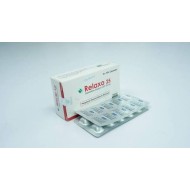

- Stock: In Stock
- Brand: Renata
- Product ID: Omeprazole
🔒 100% Secure Payment | bKash | Nagad | SSLCommerz | COD
⭐ Become a FREE Member: 7% Extra Savings • Free Delivery • Refill Reminders • Priority Support
Prazole Capsule (Enteric Coated) — Omeprazole
| Generic Name | Omeprazole |
|---|---|
| Strength | 20 mg |
| Dosage Form | Capsule |
| Manufacturer | Renata Limited |
| Therapeutic Class | Proton Pump Inhibitor |
Indications
Prazole is indicated for the treatment of-
Gastric and duodenal ulcer
NSAID-associated duodenal and gastric ulcer
As prophylaxis in patients with a history of NSAID-associated duodenal and gastric ulcer
Gastro-esophageal reflux disease
Long-term management of acid reflux disease
Acid-related dyspepsia
Severe ulcerating reflux esophagitis
Prophylaxis of acid aspiration during general anesthesia
Zollinger-Ellison syndrome
Helicobacter pylori-induced peptic ulcer.
Mechanism of Action
Omeprazole, a substituted benzimidazole, is an inhibitor of gastric acid secretion. It inhibits gastric acid secretion by blocking hydrogen-potassium-adenosine triphosphatase (H+/K+ ATPase) enzyme system in the gastric parietal cell. After oral administration, the onset of the antisecretory effect occurs within one hour, with the maximum effect occurring within two hours and inhibition of secretion lasts up to 72 hours. When the drug is discontinued, secretory activity returns gradually, over 3 to 5 days.
Contraindications
Omeprazole is contraindicated in patients with known hypersensitivity to it. When gastric ulcer is suspected, the possibility of malignancy should be excluded before treatment with omeprazole is instituted, as treatment may alleviate symptoms and delay diagnosis.
Side Effects
Prazole is well tolerated and adverse reactions have generally been mild and reversible. Skin rash, urticaria and pruritus have been reported. Usually resolving after discontinuation of treatment. In addition photosensitivity, bullous eruption, erythema multiforme, angioedema and alopecia have been reported in isolated cases. Diarrhoea and headache have been reported and may be severe enough to require discontinuation of therapy in a small number of patients. In the majority of cases the symptoms resolved after discontinuation of therapy. Other gastrointestinal reactions have included constipation, nausea/vomiting, flatulence and abdominal pain. Dry mouth, stomatitis and candidiasis have been reported as isolated cases. Paraesthesia has been reported. Dizziness, light headedness and feeling faint have been associated with treatment, but all usually resolve on cessation of therapy. Also reported are somnolence, insomnia and vertigo. Reversible mental confusion, agitation, depression and hallucinations have occurred predominantly in severely ill patients. Arthritic and myalgic symptoms have been reported and have usually resolved when therapy is stopped. In isolated cases, the following have been reported: blurred vision, taste disturbance, peripheral oedema, increased sweating, gynaecomastia, leucopenia, thrombocytopenia, agranulocytosis, pancytopenia, anaphylactic shock, malaise, fever, bronchospasm, encephalopathy in patients with pre-existing severe liver disease, hepatitis with or without jaundice, rarely interstitial nephritis and hepatic failure. Increases in liver enzymes have been observed.
Drug Interactions
Due to the decreased intragastric acidity the absorption of ketoconazole may be reduced during Prazole treatment as it is during treatment with other acid secretion inhibitors. As Prazole is metabolised in the liver through cytochrome P450 it can delay the elimination of diazepam, phenytoin and warfarin. Monitoring of patients receiving warfarin or pheytoin is recommended and a reduction of warfarin or phenytoin dose may be necessary. However concomitant treatment with Prazole 20mg daily did not change the blood concentration of phenytoin in patients on continuous treatment with phenytoin. Similarly concomitant treatment with Prazole 20mg daily did not change coagulation time in patients on continuous treatment with warfarin. Plasma concentrations of Prazole and clarithromycin are increased during concomitant administration. This is considered to be a useful interaction during H. pylori eardication. There is no evidence of an interaction with phenacetin, theophylline, caffeine, propranolol, metoprolol, cyclosporin, lidocaine, quinidine, estradiol, amoxycillin or antacids. The absorption of Prazole is not affected by alcohol or food. There is no evidence of an interaction with piroxicam, diclofenac or naproxen. This is considered useful when patients are required to continue these treatments. Simultaneous treatment with Prazole and digoxin in healthy subjects lead to a 10% increase in the bioavailability of digoxin as a consequence of the increased intragastric pH.
Pregnancy and Lactation
Results from three prospective epidemiological studies indicate no adverse effects of Omeprazole on pregnancy or on the health of the fetus/newborn child. Omeprazole can be used during pregnancy. There is no information available on the passage of Omeprazole into breast milk or its effects on the neonate. Breast-feeding should, therefore, be discontinued, if the use of Omeprazole is considered essential.Use in Children & Adolescents: Safety and effectiveness of Omeprazole have not been established in pediatric patients less than 18 years of age.
Precautions and Warnings
Avoid concomitant use of clopidogrel and Prazole as the pharmacological activity of clopidogrel is reduced if given concomitantly. Observational studies suggest that proton pump inhibitor (PPI) therapy may be associated with an increased risk for osteoporosis- related fractures of the hip, wrist, or spine. Atrophic gastritis has been noted occasionally in gastric corpus biopsies from patients treated long-term with Prazole. Concomitant use of PPIs with methotrexate may lead to methotrexate toxicities.
Storage
Keep in a dry place away from light and heat. Keep out of the reach of children.
Medical Disclaimer: This information is provided for educational purposes only and is not intended as medical advice. Always consult a qualified healthcare professional before starting, changing, or stopping any medication.