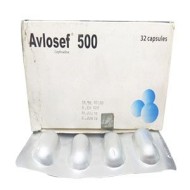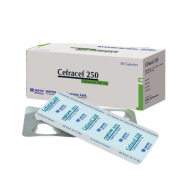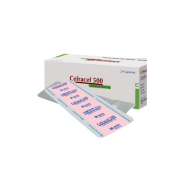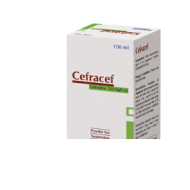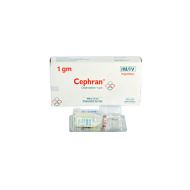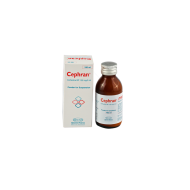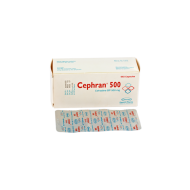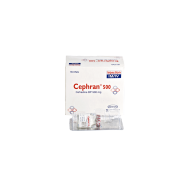
- Stock: Out Of Stock
- Brand: Incepta Pharmaceuticals
- Product ID: Cephradine
🔒 100% Secure Payment | bKash | Nagad | SSLCommerz | COD
⭐ Become a FREE Member: 7% Extra Savings • Free Delivery • Refill Reminders • Priority Support
This Item is for pre order
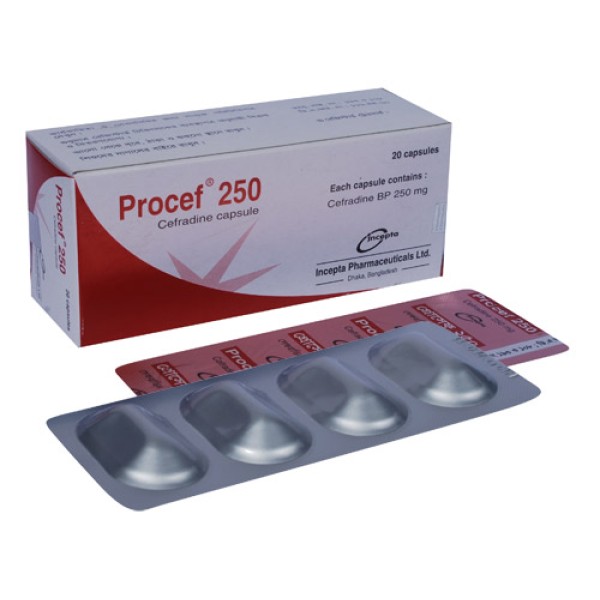
Procef 250
Description
Cefradine is a first generation cephalosporin antibiotic that works in a similar way to penicillin by inhibiting bacterial cell wall synthesis. It has a broad spectrum bactericidal activity against both gram-positive and gram-negative bacteria. The organisms sensitive to Cefradine are group A beta hemolytic streptococci, staphylococci including coagulase-positive, coagulase-negative and penicillinase-producing strains, Streptococcus pneumoniae, Escherichia coli, Proteus mirabillis, Klebsiella species and Hemophilus influenzae. Cefradine is acid stable and is rapidly absorbed after oral administration in the fasting condition. The presence of food in the gastrointestinal tract delays absorption but does not affect the total amount of Cefradine absorbed. Over 90% of the drug is excreted unchanged in the urine. Cefradine is minimally (8 to 17%) bound to normal plasma protein and does not cross the blood-brain barrier.
Indications
Procef (Cefradine) is indicated for the treatment of the following infections when caused by susceptible organisms:
The upper and lower respiratory tract infections: pharyngitis, sinusitis, otitis media, tonsillitis, laryngo-tracheo-bronchitis, acute and chronic bronchitis, lobar and chronic bronchopneumonia.
Urinary tract infections: cystitis, urethritis, pyelonephritis.
Skin and soft tissue infections: abscess, cellulitis, furunculosis and impetigo.
Surgical prophylaxis: Surgical procedures associated with high risk of disastrous consequences of infections. Procef is also of value where postoperative infections would be disastrous and where patients have a reduced host resistance to bacterial infection. Protection is best ensured by achieving adequate local tissue concentrations at the time when contaminations are likely to occur. Thus, Procef should be administered immediately prior to surgery and continued during the postoperative period.
Dosage & Administration
Procef (Cefradine) may be given regardless of meal.
Adults
Oral: The usual dose is 1-2 gm daily in 2 to 4 divided doses. In severe and chronic infection, the dose can be increased upto 4 gm daily which should be given in equally divided doses.
In skin and skin structure infections and respiratory tract infections: Usual dose is 250 mg every 6 hours or 500 mg every 12 hours.
In Lobar pneumonia: Usual dose is 500 mg every 6 hours or 1g every 12 hours.
In uncomplicated urinary tract infections: Usual dose is 500 mg every 12 hours. In more serious urinary tract infections including prostatitis, 500 mg every 6 hours or 1 g every 12 hours may be administered.
Injection: The usual dose is 2-4 g daily in four equally divided doses by deep intramuscular or intravenous route. Dose may be increased to 8 gm daily in severe infections e.g. septicaemia and endocarditis.
Surgical prophylaxis: 1-2 gm immediately prior to surgery, by intramuscular or intravenous injection over 3-5 minutes. Subsequent parenteral or oral doses can be administered as appropriate.
Children
Oral: The usual dose is 25-50 mg/kg/day total, given in 2 or 4 equally divided doses. For otitis media daily dose from 75-100 mg/kg body wt. in divided doses every 6 to 12 hours are recommended. Dose may be increased up to 4 g/day depending on the severity of the infection.
Injection: 50-100 mg/kg/day total, given in 4 equally divided doses.
(200-300 mg/kg/day may be required in more severe infections)
Elderly
There are no specific dosage recommendations or precautions for use in the elderly except as with other drugs to monitor those patients with impaired renal or hepatic functions.
Dosage in renal impairment
A modified dosage schedule is necessary in patients with decreased renal function. Each patient should be considered individually. The following modified dosage schedule is recommended as a guideline, based on creatinine clearance. In adults, the initial loading dose is 750 mg of Cefradine and the maintenance dose is 500 mg at the following intervals:
Side Effects
Rarely Cefradine may induce a hypersensitivity reaction and gastrointestinal disturbances which include nausea, vomiting, diarrhoea, glossitis, heartburn, dizziness, abdominal pain, candidial overgrowth, vaginitis, skin rashes, urticaria, joint pain and oedema. As with other cephalosporin mild transient eosinophilia, leucopenia, neutropenia and rarely positive direct coombs test and pseudomembraneous colitis have been reported.
Precautions
There is evidence of partial cross-allergenicity between penicillins and cephalosporins. Therefore Cefradine should be used with caution in patients with known hypersensitivity to penicillins.
Use in Pregnancy & Lactation
No teratogenicity has been demonstrated in animals, but safety in pregnancy has not been established. Cefradine is excreted in the breast milk and should be used with caution in lactating mothers.
Drug Interaction
The cephalosporins are potentially nephrotoxic (particularly Cefaloridine) and may enhance the nephrotoxicity of aminoglycoside antibiotics such as Gentamycin and Tobramycin. One should be cautious about the use of any cephalosporin with Frusemide and Ethacrynic acid.