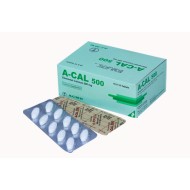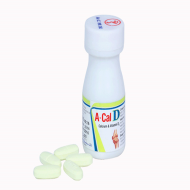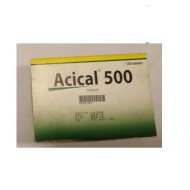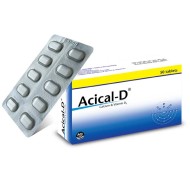
- Stock: Out Of Stock
- Brand: Acme Laboratories Limited
- Product ID: Calcium Carbonate
🔒 100% Secure Payment | bKash | Nagad | SSLCommerz | COD
⭐ Become a FREE Member: 7% Extra Savings • Free Delivery • Refill Reminders • Priority Support
This Item is for pre order
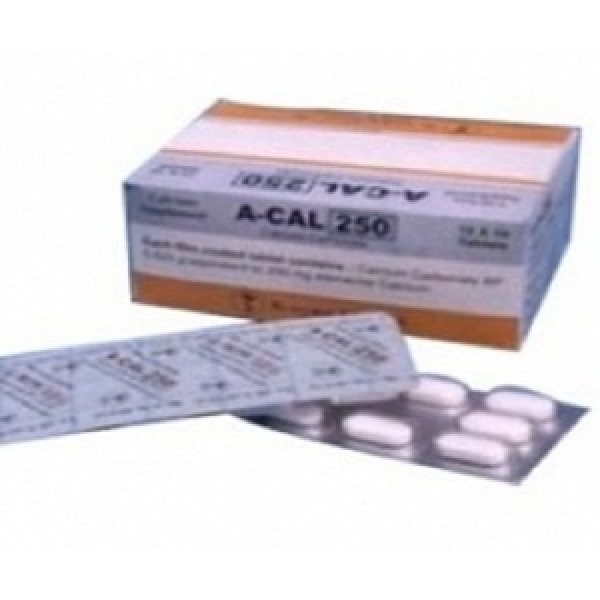
A-Cal 250 mg Tablet (Calcium Carbonate) — Product Overview
| Quick Reference | |
|---|---|
| Brand Name | A-Cal 250 mg Tablet |
| Generic Name | Calcium Carbonate 250 mg (equivalent to ~100 mg elemental calcium) |
| Drug Class | Calcium Supplement / Antacid |
| Manufacturer | ACI Limited, Bangladesh |
| Dosage Form | Tablet (1 strip) |
| Calcium Strength | 250 mg calcium carbonate (~100 mg elemental calcium) |
| Key Use | Calcium supplementation, antacid (indigestion, heartburn) |
| Storage | Below 30°C, dry place, protect from moisture |
| Prescription Status | OTC / Available Without Prescription |
What is A-Cal 250 mg?
A-Cal 250 mg Tablet contains Calcium Carbonate, one of the most widely used and cost-effective calcium supplements available. Calcium Carbonate has the highest elemental calcium content of all calcium salts (40% elemental calcium by weight), meaning A-Cal 250 mg delivers approximately 100 mg of absorbable elemental calcium per tablet. It also acts as an antacid — calcium carbonate neutralises gastric acid, providing relief from heartburn, acid indigestion, and sour stomach. A-Cal 250 mg is commonly used for children, for supplementing dietary calcium in individuals with modest requirements, or as part of a multi-dose daily regimen when higher strengths cause GI side effects.
Calcium Carbonate vs Calcium Citrate
Calcium carbonate (as in A-Cal 250) is the preferred choice for most people — it is the most concentrated and most affordable form. However, it requires stomach acid for optimal absorption, so it should be taken with food. Calcium citrate (an alternative form) can be taken on an empty stomach and may suit people with achlorhydria (reduced stomach acid), those on proton pump inhibitors (omeprazole, pantoprazole), or older adults with reduced acid secretion.
Indications
- Calcium deficiency supplementation — dietary calcium gap in children, elderly, pregnant women
- Osteoporosis prevention and treatment (as adjunct — 500–1,000 mg elemental calcium daily with Vitamin D3)
- Antacid — relief of heartburn, acid indigestion, sour stomach, GORD
- Hypoparathyroidism — chronic calcium supplementation
- Pregnancy supplementation — increased calcium requirement for foetal bone development
- Pre-eclampsia prevention — high-dose calcium supplementation (1,500–2,000 mg/day) during pregnancy reduces pre-eclampsia risk in high-risk or low-calcium populations
- Phosphate binder — in chronic kidney disease, taken with meals to bind dietary phosphate
Dosage
As calcium supplement — Children: 1–4 tablets daily (100–400 mg elemental calcium), depending on age and dietary intake. Daily calcium requirements: ages 1–3: 700 mg; 4–8: 1,000 mg; 9–18: 1,300 mg.
As calcium supplement — Adults: Typically 2–4 tablets of A-Cal 250 mg to reach 200–400 mg elemental calcium supplementation. Most adults also need 500–1,000 mg from food. Consider upgrading to A-Cal 500 mg or A-Cal D for fewer tablets and added Vitamin D3.
As antacid: 1–2 tablets as needed for symptoms, up to 4 times daily. Do not use as antacid for more than 2 weeks without medical advice.
As phosphate binder (CKD): Taken with meals to bind dietary phosphate — doses directed by nephrologist.
Take with meals for best calcium absorption (requires gastric acid).
Why Calcium Matters in Diabetes
People with diabetes — especially Type 1 and long-standing Type 2 — have a 1.5–2× higher risk of fractures compared to the general population, related to lower bone density, muscle weakness, and fall risk. Adequate calcium intake (1,000–1,200 mg/day from food and supplements combined) is essential for maintaining bone mineral density. Calcium carbonate is also used as a phosphate binder in diabetic nephropathy patients with hyperphosphataemia, under nephrology guidance.
Contraindications
- Hypercalcaemia (any cause)
- Severe renal impairment without nephrological supervision
- Calcium-containing kidney stones (use with caution, maintain hydration)
- Hypervitaminosis D (with concurrent D3)
Side Effects
Common: Constipation, bloating, flatulence — especially at higher doses. Ensure adequate fluid and fibre intake.
Acid rebound: High-dose antacid use can cause temporary rebound acid secretion after the antacid effect wears off.
Rare: Hypercalcaemia with excessive chronic use — symptoms include fatigue, confusion, polydipsia, kidney stones.
Milk-alkali syndrome: Very rare — with very high calcium intake plus absorbable antacid; presents as hypercalcaemia + alkalosis.
Drug Interactions
- Levothyroxine: Separate by ≥4 hours — calcium reduces thyroid hormone absorption
- Iron: Separate by ≥2 hours — calcium inhibits iron absorption
- Bisphosphonates: Do not co-administer — take bisphosphonate 30–60 min before food/calcium
- Tetracyclines/quinolones: Calcium chelates antibiotics — separate by 2 hours
- Thiazide diuretics: Increase serum calcium — monitor with high-dose supplementation
Frequently Asked Questions (FAQ)
Q: Should I choose A-Cal 250 mg or A-Cal 500 mg?
A: A-Cal 500 mg provides twice the calcium per tablet, is better value, and means fewer tablets per day. A-Cal 250 mg suits children, individuals who need smaller incremental doses, or those who experience constipation with 500 mg tablets. For adults with osteoporosis, A-Cal D (with Vitamin D3) is the most complete option.
Q: Can A-Cal 250 be used as an antacid for heartburn?
A: Yes. Calcium carbonate is an effective antacid. For occasional heartburn, 1–2 tablets provide quick relief. However, if heartburn is frequent, consult a doctor — chronic heartburn may need PPI therapy and investigation.
Q: How many A-Cal 250 tablets equal the daily calcium requirement?
A: Each tablet provides ~100 mg elemental calcium. An adult needs ~1,000 mg/day total. If you get ~700 mg from food, you need ~3 tablets (300 mg supplement) to bridge the gap. Most people do better with the 500 mg strength for fewer tablets.
Q: Is A-Cal 250 safe during pregnancy?
A: Yes. Calcium supplementation is recommended during pregnancy. In Bangladesh and other high-risk populations, the WHO recommends 1,500–2,000 mg/day calcium supplementation to reduce pre-eclampsia risk. Multiple A-Cal tablets throughout the day can achieve this dose.
Medical Disclaimer
For educational purposes only. Not medical advice. Consult your doctor for personalised supplementation guidance, especially if you have kidney disease, kidney stones, take multiple medications, or are pregnant.