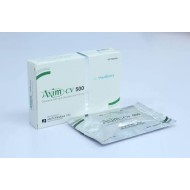
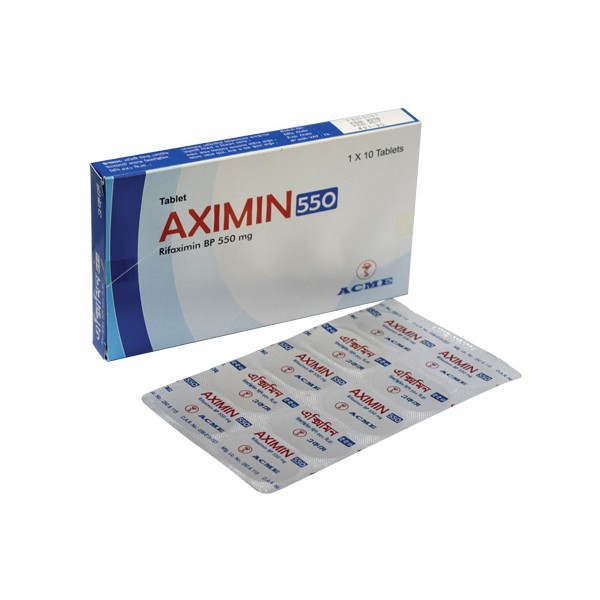
- Stock: Out Of Stock
- Brand: Acme Laboratories Limited
- Product ID: Rifaximin
🔒 100% Secure Payment | bKash | Nagad | SSLCommerz | COD
⭐ Become a FREE Member: 7% Extra Savings • Free Delivery • Refill Reminders • Priority Support
This Item is for pre order
Aximin 550 mg Tablet (Rifaximin) — Clinical Overview
| Brand Name | Aximin 550 mg Tab |
|---|---|
| Generic Name | Rifaximin |
| Manufacturer | ACI Limited, Bangladesh |
| Strength | 550 mg per tablet |
| Dosage Form | Film-coated Tablet |
| Pack Size | 10 tablets per strip |
| Drug Class | Non-absorbable Rifamycin Antibiotic (GI-specific) |
| Prescription Status | Prescription Only Medicine (POM) |
What is Aximin 550 mg?
Aximin 550 mg Tab is a high-dose formulation of rifaximin, manufactured by ACI Limited, Bangladesh. It is a non-systemic, gut-selective antibiotic of the rifamycin class — meaning it acts exclusively within the gastrointestinal tract without significant absorption into the bloodstream (<0.4% systemic bioavailability). At the 550 mg dose, rifaximin is clinically validated for two major indications: hepatic encephalopathy (HE) prevention in cirrhotic patients and irritable bowel syndrome with diarrhoea (IBS-D).
Aximin 550 mg is a distinct, higher-dose product from Aximin 200 mg (used for traveller's diarrhoea and SIBO). The two products should not be interchanged — dosing and indications differ significantly.
Mechanism of Action
Rifaximin inhibits bacterial RNA polymerase by binding irreversibly to its beta-subunit, halting mRNA synthesis and killing susceptible gut bacteria. At 550 mg, the same mechanism operates but achieves higher intraluminal concentrations, providing:
- Effective suppression of ammonia-producing colonic bacteria (e.g., urease-producing E. coli and Proteus) that drive hepatic encephalopathy
- Modulation of the gut microbiome in IBS-D — reducing bloating, abdominal pain, and loose stools by altering bacterial composition without eliminating it
- Essentially zero systemic exposure — avoiding hepatic, renal, and immune system effects
Clinical Indications
- Hepatic encephalopathy (HE) — prevention of recurrence: In patients with liver cirrhosis who have experienced ≥2 overt HE episodes, rifaximin 550 mg twice daily reduces the risk of HE recurrence and HE-related hospitalisations. Used alongside lactulose in most protocols.
- Overt HE episodes: 550 mg three times daily × 5–14 days to treat an acute episode
- IBS with diarrhoea (IBS-D): 550 mg three times daily × 14 days — reduces bloating, abdominal pain, and loose stool frequency. Approximately 40% of patients achieve symptom relief; treatment can be repeated.
Hepatic Encephalopathy and Rifaximin 550 mg
Hepatic encephalopathy (HE) is a serious neuropsychiatric complication of liver cirrhosis caused by accumulation of gut-derived toxins (principally ammonia) in the blood when the liver cannot adequately detoxify the portal circulation. Gut bacteria produce ammonia from dietary protein via urease enzymes — and rifaximin 550 mg suppresses these bacteria, reducing ammonia production at source:
- Landmark RFHE3001 trial: Rifaximin 550 mg BID reduced HE breakthrough episodes by 58% and hospitalisation by 50% compared to placebo over 6 months
- Benefits maintained in patients with Model for End-Stage Liver Disease (MELD) scores up to 25
- Particularly useful when lactulose alone is insufficient or poorly tolerated
- Long-term use (≥12 months) is well-tolerated with no emergence of clinically significant resistance
Diabetes and Hepatic/GI Conditions — Special Relevance
Diabetic patients face elevated risk of conditions that rifaximin 550 mg addresses:
- Non-alcoholic steatohepatitis (NASH) and cirrhosis: Type 2 diabetes is a major risk factor for NASH — the leading cause of cirrhosis in non-alcoholic patients. Diabetic patients with established cirrhosis are at high risk of HE. Rifaximin 550 mg is indicated for HE prevention in this group.
- IBS-D in diabetics: Diabetic autonomic neuropathy affects the entire GI tract. Many diabetics experience functional bowel symptoms indistinguishable from IBS-D. A 14-day rifaximin course may provide meaningful symptom relief.
- Glucose management in cirrhosis: Cirrhotic patients commonly develop hepatogenous diabetes (from impaired hepatic glucose regulation). Rifaximin's lack of systemic absorption means no pharmacokinetic interactions with insulin, metformin, or oral antidiabetics.
- Nutritional considerations: HE management requires careful protein restriction and timing. Coordinate rifaximin therapy with dietitian review in diabetic-cirrhotic patients who need both glucose and protein management.
Dosage and Administration
- HE prevention (maintenance): 550 mg twice daily (every 12 hours) — long-term, ongoing
- Overt HE episodes: 550 mg three times daily × 5–14 days
- IBS-D: 550 mg three times daily × 14 days (can be repeated for recurrent episodes)
May be taken with or without food. Swallow tablets whole. Do not crush or chew.
Drug Interactions
- Warfarin: Modest increase in INR reported — monitor closely
- Ciclosporin: Elevates rifaximin plasma levels via P-gp inhibition — avoid if possible
- Antidiabetics (metformin, insulin, DPP-4 inhibitors, SGLT-2 inhibitors): No clinically significant pharmacokinetic interactions due to negligible systemic absorption
Side Effects
- Common: Peripheral oedema, nausea, dizziness, fatigue, ascites (in cirrhotic patients)
- Uncommon: Headache, abdominal pain, constipation
- Rare: Hypersensitivity reactions; C. difficile infection (rare)
Contraindications
- Known hypersensitivity to rifaximin, rifamycins, or any excipient
- Intestinal obstruction
- Severely decompensated cirrhosis with MELD >25 (limited data — use with specialist guidance only)
Frequently Asked Questions (FAQ)
What is the difference between Aximin 200 mg and Aximin 550 mg?
Aximin 200 mg is used for traveller's diarrhoea (200 mg TID × 3 days) and small intestinal bacterial overgrowth (SIBO). Aximin 550 mg is used for hepatic encephalopathy prevention (550 mg twice daily, long-term) and IBS with diarrhoea (550 mg TID × 14 days). The two doses are not interchangeable — always use the dose specified by your doctor for your specific condition.
How long does rifaximin 550 mg need to be taken for hepatic encephalopathy?
For prevention of HE recurrence, rifaximin 550 mg is taken twice daily on an ongoing, long-term basis — often for 12 months or more. Clinical trial data support safety and efficacy for at least 6–12 months of continuous use. Do not stop without consulting your hepatologist, as stopping increases the risk of HE recurrence.
Is Aximin 550 mg safe for diabetic patients with liver disease?
Yes — rifaximin's negligible systemic absorption means it does not interact with metformin, insulin, DPP-4 inhibitors, or SGLT-2 inhibitors. Diabetic patients with NASH-related cirrhosis who develop hepatic encephalopathy are appropriate candidates for rifaximin 550 mg under hepatologist supervision. Blood glucose management in cirrhosis is complex and should be reviewed by a specialist team.
Can rifaximin 550 mg be used for IBS in diabetic patients?
Yes — rifaximin 550 mg TID × 14 days is an established treatment for IBS with diarrhoea (IBS-D). Diabetic patients with autonomic neuropathy often experience functional bowel symptoms similar to IBS-D. Rifaximin is an attractive option in this group as it has no systemic drug interactions and works entirely within the GI tract. Discuss with your gastroenterologist whether rifaximin IBS therapy is appropriate for your symptoms.