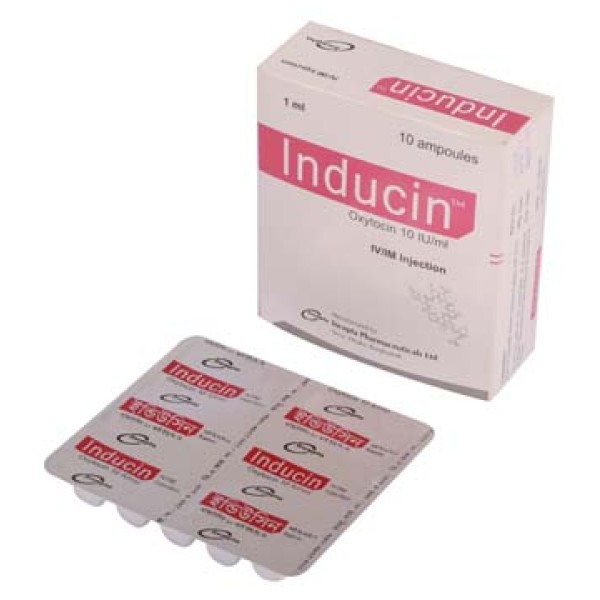
- Stock: Out Of Stock
- Brand: Incepta Pharmaceuticals
- Product ID: Oxytocin
🔒 100% Secure Payment | bKash | Nagad | SSLCommerz | COD
⭐ Become a FREE Member: 7% Extra Savings • Free Delivery • Refill Reminders • Priority Support
This Item is for pre order
| Generic Name | Oxytocin |
| Brand Name | Inducin |
| Manufacturer | Incepta Pharmaceuticals Ltd. |
| Dosage Form | Injection |
| Strength | 10 IU/ml |
| Pack Size | Data not reliably available - please check current packaging/listing |
| Drug Class | Oxytocic (Uterotonic agent) |
| Prescription Required | Yes - Rx only; for use under direct medical/hospital supervision |
| Onset/Peak/Duration | Onset: 3-5 minutes (IV); 3-7 minutes (IM). Duration: 1 hour (IV); 2-3 hours (IM) |
What is Inducin Injection?
Inducin Injection is a synthetic Oxytocin preparation manufactured by Incepta Pharmaceuticals Ltd. Oxytocin is identical to the naturally occurring hormone released from the posterior pituitary gland and is used in obstetric care to stimulate uterine contractions.
Generic Name and Composition
Each ml contains Oxytocin 10 IU, synthetically prepared and structurally identical to the natural hormone secreted by the posterior pituitary gland.
Indications
- Induction of labor and stimulation/augmentation of uterine contractions during labor
- Prevention or treatment of postpartum hemorrhage (secondary hemorrhage) and adherent placenta
- Stimulation of lactation (when specifically advised by a registered physician)
- Management of incomplete abortion
How It Works - Mechanism of Action
Oxytocin acts on uterine smooth muscle receptors to stimulate rhythmic contractions, mimicking spontaneous labor. It increases the amplitude, frequency, and duration of uterine contractions, leading to dilation and effacement of the cervix. It transiently reduces uterine blood flow during contraction. Oxytocin also stimulates milk ejection from the mammary glands by acting on myoepithelial cells.
Dosage and Administration
- For use only by, or under the direct supervision of, a qualified obstetric care provider in a hospital/clinical setting with appropriate monitoring facilities
- Dose and route (IV infusion or IM injection) are individualized based on indication, gestational status, and uterine response
- Continuous fetal heart rate and uterine contraction monitoring is required during labor induction/augmentation
- Postpartum hemorrhage management typically uses IM or slow IV administration as per clinical protocol
- Never self-administer - this medicine must be given by trained healthcare personnel
Side Effects
Common: Nausea, vomiting, uterine hypertonicity or hyperstimulation
Uncommon: Arrhythmias, hypotension, flushing
Rare: Water intoxication/hyponatremia (with prolonged high-dose IV infusion), uterine rupture, anaphylactoid reactions, fetal distress due to uterine hyperstimulation
Drug Interactions
Prostaglandins (e.g., Misoprostol, Dinoprostone): Concurrent or closely sequential use may potentiate uterotonic effect and increase risk of uterine hyperstimulation - use with caution and appropriate spacing per clinical protocol
Vasoconstrictor Sympathomimetics: May potentiate the pressor effect of oxytocin, increasing risk of severe hypertension
Cyclopropane Anesthesia: May alter cardiovascular response to oxytocin (e.g., hypotension, arrhythmia) - caution advised
Contraindications
- Significant cephalopelvic disproportion or other conditions where vaginal delivery is contraindicated
- Unfavorable fetal positions or presentations undeliverable without conversion before delivery
- Fetal distress where delivery is not imminent
- Hypertonic or hyperactive uterus
- Cases of placenta previa or vasa previa
- Known hypersensitivity to oxytocin
Pregnancy and Lactation
Inducin is specifically indicated for use in obstetric care during labor, delivery, and the immediate postpartum period under direct medical supervision. It is also used to support lactation when advised by a registered physician. Use strictly according to obstetric indication and clinical protocol - never use outside of a supervised clinical setting.
Precautions and Warnings
- Must only be administered in a setting equipped for continuous maternal and fetal monitoring, with facilities for emergency cesarean delivery if needed
- Risk of uterine hyperstimulation/rupture, particularly in women with prior cesarean section or uterine surgery
- Prolonged administration with large volumes of electrolyte-free IV fluids carries risk of water intoxication and hyponatremia
- Use with caution in women with cardiovascular disease, due to potential cardiovascular effects
- Discontinue immediately if uterine hyperstimulation or fetal distress occurs
Overdose
Overdose or excessive administration may cause uterine hyperstimulation, tetanic contractions, uterine rupture, and fetal distress or hypoxia. Water intoxication (hyponatremia, convulsions) may occur with excessive electrolyte-free fluid administration alongside oxytocin. Management requires immediate discontinuation of the infusion and supportive medical care in a hospital setting.
Storage Instructions
- Store in a refrigerator (2-8°C); protect from light - or as per manufacturer's specific storage guidance on the pack
- Do not freeze
- Keep out of reach of children
- Use only in a clinical/hospital setting under direct medical supervision
Frequently Asked Questions
Q1: What is Inducin Injection used for?
A1: It is used for induction or augmentation of labor, prevention and treatment of postpartum hemorrhage, stimulation of lactation under medical advice, and management of incomplete abortion.
Q2: Can Inducin be self-administered at home?
A2: No. Inducin must only be administered by trained healthcare professionals in a hospital or clinical setting with continuous fetal and maternal monitoring capability.
Q3: What monitoring is required during Inducin administration?
A3: Continuous monitoring of uterine contractions and fetal heart rate is required throughout administration, along with maternal vital signs, to detect uterine hyperstimulation or fetal distress early.
Q4: How does Inducin differ from prostaglandin-based labor induction agents?
A4: Inducin (Oxytocin) directly stimulates uterine muscle contraction and is typically given as a titrated IV infusion with close monitoring, while prostaglandin agents (e.g., Misoprostol, Dinoprostone) primarily ripen the cervix and may also stimulate contractions, often given orally/vaginally. The choice and sequencing between these agents is determined by the obstetric care provider based on cervical status and clinical indication.
Medical Disclaimer
This is a prescription-only (Rx) medicine intended strictly for use under direct medical/hospital supervision in obstetric care. The information provided here is for educational purposes and does not replace professional medical advice. DiabetesStore.com.bd is a licensed online pharmacy in Bangladesh. Please consult your doctor before starting, stopping, or changing any medication.