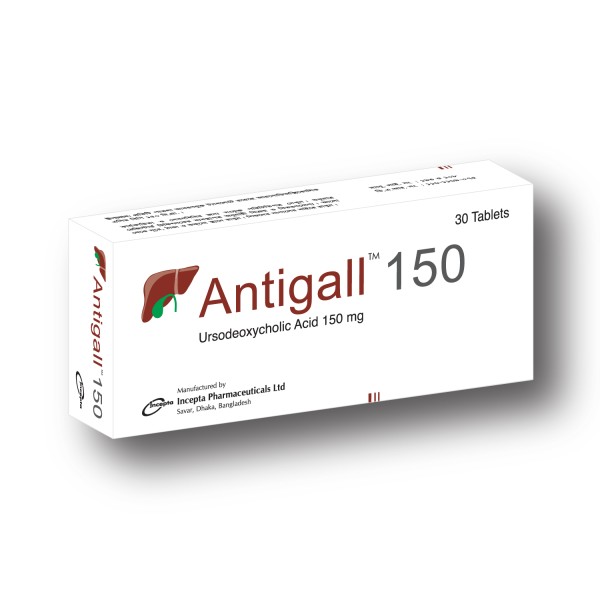
- Stock: In Stock
- Brand: Incepta Pharmaceuticals
- Product ID: Ursodeoxycholic Acid
🔒 100% Secure Payment | bKash | Nagad | SSLCommerz | COD
⭐ Become a FREE Member: 7% Extra Savings • Free Delivery • Refill Reminders • Priority Support
Antigall 150mg Tablet (Ursodeoxycholic Acid)
Manufacturer: Incepta Pharmaceuticals Ltd.
Generic Name: Ursodeoxycholic Acid (UDCA) 150mg
Therapeutic Class: Cholelitholytic Agent / Hepatoprotective / Bile Acid
Price: ৳13.00 per tablet
Indications
Antigall 150mg is indicated for:
- Dissolution of cholesterol gallstones: Non-calcified, radiolucent cholesterol gallstones in patients with a functioning gallbladder who are unwilling or unfit for surgery
- Primary Biliary Cholangitis (PBC): Also known as Primary Biliary Cirrhosis — slows disease progression and reduces liver enzyme elevation
- Non-alcoholic steatohepatitis (NASH) and non-alcoholic fatty liver disease (NAFLD)
- Chronic active hepatitis
- Intrahepatic cholestasis of pregnancy — relieves pruritis and reduces serum bile acids
- Sclerosing cholangitis (primary sclerosing cholangitis)
- Cystic fibrosis-associated liver disease
- Prevention of gallstone recurrence after lithotripsy or surgical stone removal
Composition
Each tablet contains: Ursodeoxycholic Acid (UDCA) 150mg
Mechanism of Action
Ursodeoxycholic acid is a naturally occurring hydrophilic bile acid that constitutes a small fraction of the normal bile acid pool. It acts through multiple mechanisms:
- Cholesterol solubilisation: Reduces hepatic cholesterol synthesis and secretion into bile; decreases intestinal absorption of cholesterol; increases cholesterol solubility in bile — collectively preventing formation and promoting dissolution of cholesterol gallstones.
- Cytoprotection: Displaces hydrophobic, cytotoxic bile acids (chenodeoxycholic acid, deoxycholic acid) from the bile acid pool, reducing their damaging effects on hepatocyte and bile duct cell membranes.
- Immunomodulation: Reduces aberrant expression of MHC class I antigens on hepatocytes and class II antigens on biliary epithelium — relevant in PBC and autoimmune hepatitis.
- Anti-apoptotic: Prevents bile acid-induced apoptosis of hepatocytes and cholangiocytes.
- Choleretic: Stimulates hepatic secretion and bile flow, reducing intrahepatic bile stasis.
Dosage and Administration
Gallstone dissolution: 8–10 mg/kg/day in 2–3 divided doses with food, or as a single dose at bedtime. Duration: 6–24 months. Response should be assessed by imaging at 6 months; discontinue if stones have not partially dissolved.
Primary Biliary Cholangitis (PBC): 13–15 mg/kg/day in 2–4 divided doses.
NAFLD/NASH: 10–15 mg/kg/day in divided doses.
Intrahepatic cholestasis of pregnancy: 10–15 mg/kg/day in divided doses — start as soon as diagnosis is confirmed.
Note: Antigall 150mg tablets are particularly suitable for lower or divided dosing regimens. For higher doses, Antigall 300mg tablets offer more convenient dosing.
Take tablets with food and water. Antacids containing aluminium hydroxide should be taken at least 2 hours apart.
Contraindications
- Acute inflammation of the gallbladder or bile ducts
- Frequent biliary colic attacks
- Calcified (radio-opaque) gallstones
- Non-functioning gallbladder (confirmed on cholecystography)
- Inflammatory bowel disease (Crohn's disease, ulcerative colitis)
- Known hypersensitivity to UDCA or any bile acid
Warnings and Precautions
- Monitor liver function tests (ALT, AST, GGT, ALP) every 4 weeks during the first 3 months of treatment, then every 3 months thereafter.
- Perform liver ultrasound or cholecystography every 6 months during gallstone dissolution therapy.
- UDCA does not dissolve calcified or pigment stones — patient selection based on imaging is essential.
- Upon successful dissolution, recurrence rate is approximately 50% within 5 years; maintenance therapy may be considered.
Side Effects
Common: Diarrhoea (particularly at high doses), nausea, abdominal discomfort.
Uncommon: Pruritus (itching), urticaria, alopecia — rare.
Rare: Calcification of gallstones (if dehydrocholic acid is present); liver decompensation in advanced cirrhosis.
UDCA is generally very well tolerated, with a favourable side-effect profile compared to chenodeoxycholic acid.
Drug Interactions
- Antacids (aluminium hydroxide) and cholestyramine: Bind UDCA in the gut and reduce absorption — separate by at least 2 hours.
- Clofibrate, oral contraceptives, oestrogens: Increase biliary cholesterol secretion and may counteract the stone-dissolving effect of UDCA.
- Cyclosporin: UDCA may increase cyclosporin absorption — monitor cyclosporin blood levels.
- Ciprofibrate: UDCA may increase ciprofibrate plasma levels.
Use in Pregnancy and Lactation
Pregnancy: UDCA is actually indicated for intrahepatic cholestasis of pregnancy, where it has a well-established safety record and reduces maternal pruritus and serum bile acid levels, improving foetal outcomes. Use only under physician supervision.
Lactation: UDCA is excreted in breast milk in small quantities; use with caution and only if clearly necessary.
Storage
Store below 25°C in a dry place, protected from light and moisture. Keep out of reach of children. Do not use after the expiry date printed on the pack.
Pricing
Antigall 150mg Tablet: ৳13.00 per tablet
Disclaimer: This product information is for reference purposes only and does not substitute professional medical advice, diagnosis, or treatment. Always consult a registered physician or qualified healthcare professional before taking any medication.