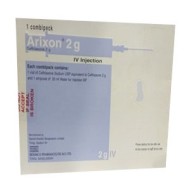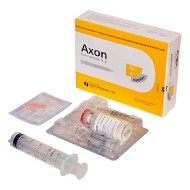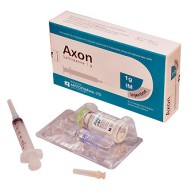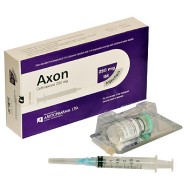

- Stock: Out Of Stock
- Brand: ACI Pharmaceuticals
- Product ID: Ceftriaxone
🔒 100% Secure Payment | bKash | Nagad | SSLCommerz | COD
⭐ Become a FREE Member: 7% Extra Savings • Free Delivery • Refill Reminders • Priority Support
This Item is for pre order
Aciphin IM 500mg Injection — Ceftriaxone 500mg Intramuscular
| Product Overview | |
|---|---|
| Brand Name | Aciphin® IM 500mg |
| Generic Name | Ceftriaxone Sodium USP equivalent to Ceftriaxone 500 mg |
| Manufacturer | ACI Pharmaceuticals Ltd., Bangladesh |
| Drug Class | 3rd Generation Cephalosporin Antibiotic |
| Dosage Form | Dry Powder for Intramuscular (IM) Injection |
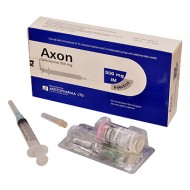
| Pack Contents (IM) | 1 vial ceftriaxone 500mg + 1 ampoule 2ml Xylone 1% (Lidocaine HCl 1%) + 5ml syringe + baby needle + first aid bandage + alcohol pad |
| Route | Intramuscular (IM) ONLY — NEVER give intravenously |
| Reconstitution | Dissolve 500mg in 2ml Xylone 1% (lidocaine HCl 1%); inject deep into large muscle (gluteus maximus or vastus lateralis) |
| Prescription Status | Prescription Required (Rx) |
| Storage | Below 30°C, protected from light. Use reconstituted solution immediately. |
1. Indications
Aciphin® IM 500mg is a convenient outpatient/clinic IM dose of ceftriaxone for moderate bacterial infections requiring parenteral therapy. Indicated for: community-acquired pneumonia (outpatient); complicated and uncomplicated urinary tract infections (UTI, pyelonephritis); skin and soft tissue infections; bone and joint infections; ENT infections (sinusitis, otitis media); paediatric infections (weight-based dosing); step-down from higher IV ceftriaxone doses post-hospitalisation; and other susceptible bacterial infections where once-daily IM injection is preferred over IV access.
Diabetes relevance: Outpatient management of mild-to-moderate diabetic foot infections, UTIs in diabetic patients with poor venous access, and skin/soft tissue infections in diabetics not requiring hospitalisation. Near-complete IM bioavailability ensures therapeutic serum levels equivalent to IV administration.
2. Mechanism of Action
Ceftriaxone binds penicillin-binding proteins (PBPs 1a, 1b, 2, 3) in bacterial cell walls, blocking peptidoglycan cross-linking and causing cell lysis (bactericidal). IM route achieves near-100% bioavailability with peak serum levels 1–2h post-injection, equivalent in efficacy to IV for most tissue infections. Broad spectrum against Gram-positive and Gram-negative pathogens including beta-lactamase producers.
3. Dosage & Administration
Adults: 1–2g IM once daily. Paediatrics: 20–80 mg/kg/day IM. Surgical prophylaxis: 1–2g IM single dose pre-operatively.
Reconstitution: Draw 2ml Xylone 1% (lidocaine ampoule provided) into the 5ml syringe via baby needle. Inject into the 500mg ceftriaxone vial. Gently mix until fully dissolved — solution will be clear to slightly yellow. Using the baby needle, draw up the reconstituted solution and administer by deep IM injection into the upper outer gluteal region or vastus lateralis. Aspirate before injecting to confirm non-vascular placement.
NEVER inject lidocaine-reconstituted solution intravenously.
Duration: Typically 5–14 days. Continue 2–3 days after symptom resolution.
4. Side Effects
Injection site: mild pain and induration (reduced significantly by lidocaine solvent). GI: nausea, vomiting, diarrhoea. CDAD (report persistent diarrhoea). Haematological: eosinophilia, thrombocytopenia, leucopaenia. Biliary pseudolithiasis (reversible). Hepatic: transient raised liver enzymes. Hypersensitivity: rash, urticaria; anaphylaxis (rare). Lidocaine at 20mg IM dose: systemic effects not expected clinically.
5. Contraindications
Hypersensitivity to ceftriaxone, cephalosporins, or lidocaine (local anaesthetic allergy); penicillin anaphylaxis history; hyperbilirubinaemic/premature neonates; cardiac conduction disorders (lidocaine caution). Must not be given IV.
6. Warnings & Precautions
Screen for allergy to cephalosporins, penicillin, and lidocaine. Aspirate before IM injection. Epinephrine available for anaphylaxis. CDAD monitoring. Strictly separate IM and IV packs — route mix-up is dangerous. Keep lidocaine-reconstituted solution strictly for IM use.
7. Drug Interactions
Aminoglycosides: synergistic (separate IM sites). Warfarin: monitor INR. Calcium-containing IV solutions: N/A for IM route. Lidocaine antiarrhythmics: additive effect at high systemic doses (not clinically relevant at 20mg reconstitution dose).
8. Pharmacokinetics
IM bioavailability ~100%. Peak serum levels: 1–2h post-injection. Half-life 6–9h (once-daily dosing effective). Dual elimination: ~50% renal, ~50% biliary. Excellent tissue penetration equivalent to IV route. Lidocaine: 20mg dose absorbed systemically from IM site — below therapeutic antiarrhythmic range.
9. Storage
Store below 30°C, away from light. Use reconstituted solution immediately. Do not store lidocaine-reconstituted ceftriaxone.
10. Course Completion
Complete the full prescribed course. Stopping early risks treatment failure, relapse, and resistance development.
11. Overdose
No antidote. Not dialyzable. Supportive management. Monitor for neurological and cardiac effects if lidocaine solution is inadvertently given IV.
12. Clinical Evidence
WHO Essential Medicine. IM ceftriaxone demonstrated equivalent clinical outcomes to IV in multiple RCTs for pneumonia, UTI, and skin/soft tissue infections (once-daily IM regimen). Preferred parenteral option in Bangladesh outpatient clinics and diagnostic centres where IV facilities are unavailable.
13. Patient Counselling
Inform prescriber of any allergy to lidocaine or "caine" anaesthetics. Muscle soreness after injection is normal. Report skin rash, breathing difficulty, or chest pain immediately. Avoid self-administration — requires trained healthcare professional. Complete full antibiotic course.
Frequently Asked Questions (FAQ)
Q1. What is the advantage of Aciphin IM over Aciphin IV for outpatient treatment?
The IM route eliminates the need for IV cannulation and IV fluid infrastructure — it is faster to administer, avoids phlebitis, and is well suited to outpatient clinics, diagnostic centres, and community health settings in Bangladesh. Near-100% IM bioavailability ensures the same therapeutic ceftriaxone blood levels as IV. Once-daily IM dosing allows outpatient treatment of pneumonia, complicated UTI, skin infections, and diabetic foot infections that would otherwise require hospitalisation. The lidocaine reconstitution minimises injection pain, making once-daily IM dosing patient-acceptable.
Q2. Can 500mg IM ceftriaxone be split into two injection sites?
For the 500mg dose, a single deep IM injection is standard — the volume (approximately 2ml reconstituted) is acceptable for a single gluteal or vastus lateralis injection. For higher doses (1g or 2g IM), splitting between two sites is sometimes recommended to reduce local discomfort. Never mix or split the solvent ampoule between separate vials — each vial requires its own reconstitution with the provided solvent.
Q3. Is it safe to use Aciphin IM in children?
Yes — ceftriaxone IM is used in children 15 days and older at 20–80 mg/kg/day. The lidocaine reconstitution is safe for IM use in children (the 20mg lidocaine in the 500mg pack is well below toxic dose for any child over 15 days). However, ceftriaxone should not be used in premature neonates or jaundiced neonates regardless of route. Always calculate weight-based dose carefully and confirm there are no contraindications before administration in children.
Q4. How should Aciphin IM 500mg be stored and how long is it stable after reconstitution?
Store the dry powder vial and solvent ampoule below 30°C in a dry place, protected from light — as per ACI official data. Once the 500mg ceftriaxone is reconstituted in 2ml Xylone 1%, the solution should be used immediately. Lidocaine-reconstituted ceftriaxone is stable at room temperature for up to 6 hours in some references, but ACI recommends immediate use for safety and sterility assurance. Always prepare fresh immediately before administration and discard any unused portion.
⚕ Medical Disclaimer: Aciphin® IM 500mg is a prescription antibiotic for IM administration by trained healthcare professionals only. Information sourced from ACI Pharmaceuticals Ltd. official data. Educational purposes only. Never give the lidocaine-reconstituted solution intravenously.