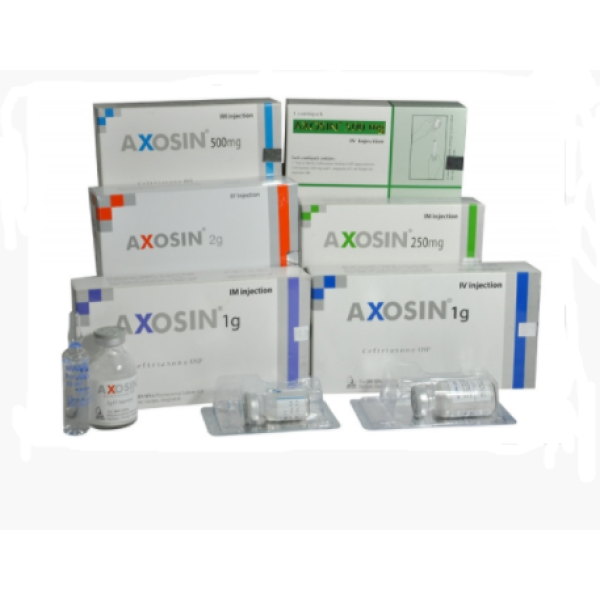
- Stock: In Stock
- Brand: Ibn-Sina Pharmaceuticals Ltd.
- Product ID: Ceftriaxone
Available Options
🔒 100% Secure Payment | bKash | Nagad | SSLCommerz | COD
⭐ Become a FREE Member: 7% Extra Savings • Free Delivery • Refill Reminders • Priority Support
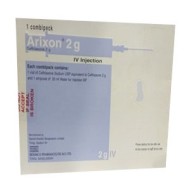
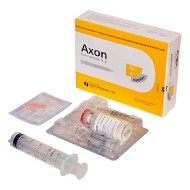
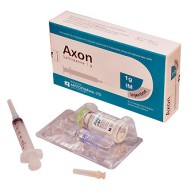
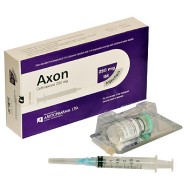
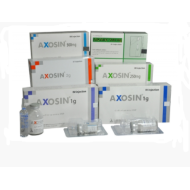
Axosin IM 500mg Injection (Ceftriaxone Sodium) — Clinical Overview
| Attribute | Details |
|---|---|
| Brand Name | Axosin |
| Generic Name | Ceftriaxone Sodium |
| Strength | 500 mg |
| Dosage Form | Powder for Intramuscular (IM) Injection |
| Drug Class | Third-generation Cephalosporin Antibiotic |
| Manufacturer | ACI Limited, Bangladesh |
| Route of Administration | Intramuscular (IM) |
| Pack Size | Single vial |
What Is Axosin IM 500mg?
Axosin IM 500mg contains ceftriaxone sodium 500 mg in lyophilised powder form for intramuscular injection, manufactured by ACI Limited, Bangladesh. This mid-range dose formulation serves as a clinically versatile option — covering paediatric doses for children weighing 10–20 kg, half-dose applications in adult treatment courses, and specific adult indications where 500 mg constitutes an appropriate therapeutic amount. It also offers an economical choice when full 1g dosing is split across two injections at different sites.
As a third-generation cephalosporin, ceftriaxone inhibits bacterial transpeptidase enzymes (PBPs) involved in cell wall cross-linking, causing osmotic lysis of susceptible bacteria. Its spectrum is broad, covering most community-acquired gram-positive and gram-negative pathogens, with notable activity against Enterobacteriaceae, Streptococcus pneumoniae, Haemophilus influenzae, and Neisseria species. Its half-life of 6–9 hours supports once-daily intramuscular administration.
Approved Indications for Axosin IM 500mg
Axosin IM 500mg is used across multiple clinical scenarios: respiratory tract infections including community-acquired pneumonia in children and mild cases in adults; urinary tract infections including acute pyelonephritis where IM therapy is preferred over IV; skin and soft tissue infections including infected wounds, cellulitis, and furunculosis; abdominal infections in combination with metronidazole (for aerobic coverage in mixed infections); sexually transmitted infections — ceftriaxone 500 mg IM single dose is now the WHO-recommended dose for uncomplicated gonorrhoea (updated 2021 guidelines, increased from 250mg due to rising MICs globally); and paediatric infections in children weighing 10–15 kg at 50 mg/kg/day dosing.
WHO Updated Gonorrhoea Treatment — 500mg is Now Standard
A critical update for prescribers in Bangladesh: the World Health Organization updated its gonorrhoea treatment guidelines in 2021, increasing the recommended ceftriaxone IM dose for uncomplicated gonorrhoea from 250 mg to 500 mg single dose. This change reflects the global rise in Neisseria gonorrhoeae strains with elevated ceftriaxone MICs. The 500 mg single-dose IM treatment provides a higher margin above the MIC, reducing the risk of treatment failure in a single clinic visit. Bangladesh STI treatment protocols should align with this WHO recommendation. Axosin IM 500mg is therefore the preferred vial size for gonorrhoea treatment in clinical settings following current international guidelines.
Paediatric Dosing with the 500mg Vial
The 500 mg vial is practical for children in the 10–20 kg weight range when dosing at 50 mg/kg/day: 10 kg child: 500 mg once daily (one full vial); 15 kg child: 750 mg once daily (one 500 mg vial + one 250 mg vial); 20 kg child: 1000 mg once daily (two 500 mg vials or one 1g vial). For acute otitis media treatment failure: 50 mg/kg single dose IM (maximum 1g), making the 500 mg vial appropriate for a 10 kg child. For pneumonia in children aged 2–59 months (severe pneumonia requiring referral): ceftriaxone 80 mg/kg IM or IV once daily for 5–7 days per WHO integrated management of childhood illness (IMCI) protocols. Reconstitute the 500 mg vial with 1.8 mL of 1% lidocaine for IM use, yielding approximately 250 mg/mL. Administer deep IM into the anterolateral thigh for infants and toddlers.
Step-Down Therapy — IM to Oral Transition
A key principle in modern antibiotic stewardship is early de-escalation from injectable to oral therapy once clinical improvement is demonstrated. For most community-acquired infections treated with Axosin IM 500mg, the transition to oral antibiotics should be considered once the patient is afebrile for 24–48 hours, white cell count is normalising, and the patient can tolerate oral medications. Suitable oral step-down agents include: amoxicillin-clavulanate (co-amoxiclav) for respiratory and soft tissue infections; ciprofloxacin or trimethoprim-sulfamethoxazole for urinary tract infections (guided by local sensitivity patterns); azithromycin for atypical respiratory pathogens. This strategy — initiating with Axosin IM 500mg in a clinic setting, then transitioning to oral antibiotics — reduces the total injection burden, lowers healthcare-associated risks, and is cost-effective for patients in Bangladesh.
IM Reconstitution and Injection Technique
For safe IM administration of Axosin 500mg: withdraw 1.8 mL of 1% lidocaine hydrochloride into a syringe. Inject into the 500 mg vial powder. Swirl gently until completely dissolved (do not shake). The solution (approximately 2 mL at 250 mg/mL) should be clear to pale yellow. Draw up the full volume. Select injection site: adults — upper outer quadrant of gluteus maximus (deep IM); children — anterolateral thigh. Cleanse the site with alcohol swab and allow to dry. Insert the needle at 90 degrees using a Z-track technique to minimise leakage. Aspirate briefly to confirm no blood vessel has been entered. Inject slowly over 5–10 seconds. Withdraw and apply gentle pressure. Do NOT rub the site. Document the injection site and rotate sites if multiple daily injections are required.
Drug Interactions and Safety Profile
Ceftriaxone has a well-established safety profile with limited drug interactions. Key considerations: warfarin — ceftriaxone may prolong prothrombin time (PT/INR) by reducing vitamin K-producing gut flora; monitor INR in patients on anticoagulation. Calcium — intravenous (not IM) ceftriaxone must not be mixed with calcium-containing solutions due to precipitation risk; this is particularly relevant in neonates. Oral contraceptives — theoretical reduction in efficacy due to gut flora disruption; advise use of additional contraceptive measures during treatment. Aminoglycosides — synergistic antibacterial effect for gram-negative infections; administer as separate injections at different sites. Probenecid — unlike other cephalosporins, probenecid does not significantly reduce ceftriaxone renal clearance. Side effects: common — injection site pain (minimised by lidocaine reconstitution), diarrhoea, nausea. Uncommon — Clostridioides difficile-associated diarrhoea (with prolonged courses), biliary sludge (with courses exceeding 10 days). Rare — hypersensitivity reactions including rash, urticaria, and anaphylaxis.
Frequently Asked Questions (FAQ)
Q1: Why has the recommended dose for gonorrhoea treatment changed from 250mg to 500mg ceftriaxone?
The WHO updated its gonorrhoea treatment recommendation in 2021, increasing the ceftriaxone dose from 250 mg to 500 mg IM single dose. This change was driven by global surveillance data showing rising ceftriaxone minimum inhibitory concentrations (MICs) in Neisseria gonorrhoeae strains, including multi-drug resistant "super-gonorrhoea" strains. The higher 500 mg dose provides greater pharmacodynamic coverage against these strains, reducing treatment failure. Axosin IM 500mg is therefore the appropriate choice for gonorrhoea treatment per current WHO guidelines.
Q2: Can Axosin IM 500mg be given twice daily to achieve a 1g daily dose?
Yes, if a 1g daily dose is required but only 500 mg vials are available, administering 500 mg IM into each buttock simultaneously is an acceptable approach. However, injecting two separate deep IM doses causes more patient discomfort than a single 1g vial reconstituted appropriately. When a 1g daily dose is planned from the outset, the 1g vial is more practical. Splitting into 500 mg twice daily (every 12 hours) to achieve 1g/day is pharmacologically unnecessary given ceftriaxone's long half-life and once-daily dosing is adequate.
Q3: Is Axosin IM 500mg the same as Axon 500mg?
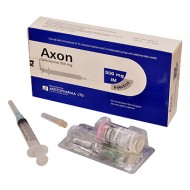
Yes. Axosin and Axon are both brand names manufactured by ACI Limited, Bangladesh, for the same active pharmaceutical ingredient: ceftriaxone sodium. The two brands are bioequivalent and interchangeable. The different brand names reflect ACI's dual-brand marketing strategy, and both are available through ACI's distribution network across Bangladesh.
Q4: How long does a course of Axosin IM 500mg typically last?
Duration depends on the indication: gonorrhoea — single 500 mg IM dose (one injection only); acute otitis media failure — 1–3 daily injections; uncomplicated pyelonephritis — 3–5 days, transitioning to oral antibiotics once improving; community-acquired pneumonia (mild to moderate) — 5–7 days IM, or 2–3 days IM then oral step-down; skin infections — 5–7 days. Antibiotic courses should not be prolonged beyond clinical necessity. Reassess the patient after 48–72 hours to confirm response and plan step-down to oral therapy where appropriate.
Medical Disclaimer: This content is intended for healthcare professional reference and patient education only. Axosin IM 500mg is a prescription-only injectable antibiotic. All dosing, duration, and indication decisions must be made by a licensed physician. Self-administration of injectable antibiotics is not recommended. Consult a qualified healthcare provider for personalised medical advice.