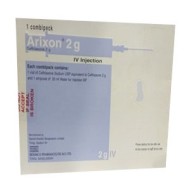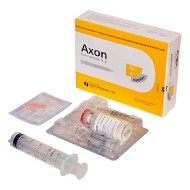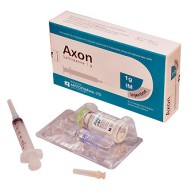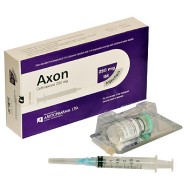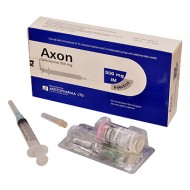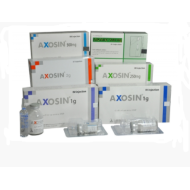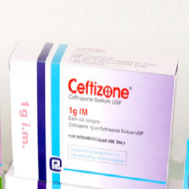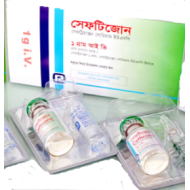
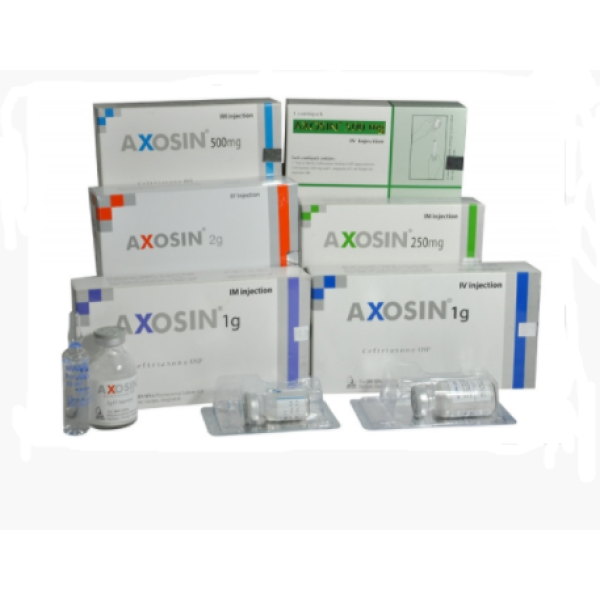
- Stock: In Stock
- Brand: Ibn-Sina Pharmaceuticals Ltd.
- Product ID: Ceftriaxone
Available Options
🔒 100% Secure Payment | bKash | Nagad | SSLCommerz | COD
⭐ Become a FREE Member: 7% Extra Savings • Free Delivery • Refill Reminders • Priority Support
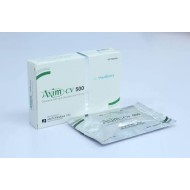
Axosin IV 1gm Injection (Ceftriaxone Sodium) — Clinical Overview
| Attribute | Details |
|---|---|
| Brand Name | Axosin |
| Generic Name | Ceftriaxone Sodium |
| Strength | 1 gram (1000 mg) |
| Dosage Form | Powder for Intravenous (IV) Injection/Infusion |
| Drug Class | Third-generation Cephalosporin Antibiotic |
| Manufacturer | ACI Limited, Bangladesh |
| Route of Administration | Intravenous (IV bolus or infusion) |
| Pack Size | Single vial |
About Axosin IV 1gm — ACI Limited Ceftriaxone for Hospital Use
Axosin IV 1gm is a sterile lyophilised powder containing ceftriaxone sodium 1 gram, manufactured to pharmaceutical GMP standards by ACI Limited, Bangladesh. The intravenous formulation is designed for hospital-based treatment of moderate-to-severe bacterial infections where immediate and sustained high serum drug concentrations are required. It is a core component of hospital antibiotic formularies across Bangladesh's public and private healthcare sector.
Ceftriaxone's mechanism — irreversible binding to transpeptidase penicillin-binding proteins (PBP1, PBP2, PBP3) causing cell wall synthesis arrest — produces rapid, concentration-dependent bacterial killing in the initial phase, followed by sustained time-dependent action. Its exceptional protein binding (95%) creates a large reservoir of bound drug that continuously replenishes the free fraction, extending the duration of antibacterial activity well beyond the plasma half-life. This unique PK profile justifies once-daily IV dosing even for serious infections.
Hospital Formulary Positioning — Where Axosin IV 1gm Fits
In Bangladesh's hospital antibiotic formularies, ceftriaxone IV occupies a critical mid-tier position between narrow-spectrum oral agents and broad-spectrum carbapenems. It is appropriately used as: empirical first-line therapy for suspected gram-negative sepsis of community origin; definitive treatment when culture results confirm susceptible Enterobacteriaceae, S. pneumoniae, or H. influenzae; bridge therapy during the first 48–72 hours while awaiting blood culture results; and de-escalation target when a patient initially started on carbapenems grows a ceftriaxone-susceptible organism. Rational use of ceftriaxone IV as a carbapenem-sparing strategy is a priority in Bangladesh's antibiotic stewardship programmes, where carbapenem-resistant organisms (CROs) are an escalating public health concern.
ESBL and Ceftriaxone Resistance — Critical Awareness
A critical limitation of ceftriaxone that every prescriber in Bangladesh must understand: Extended-Spectrum Beta-Lactamase (ESBL)-producing gram-negative bacteria are NOT susceptible to ceftriaxone, regardless of the dose administered. ESBL enzymes (most commonly CTX-M type in Bangladesh) hydrolyse the beta-lactam ring of all cephalosporins, including third-generation ceftriaxone. ESBL production is now prevalent in community-acquired Enterobacteriaceae in Bangladesh — studies report ESBL rates of 60–80% in E. coli isolates from urinary tract infections in Dhaka. Clinical implications: ceftriaxone is not appropriate empirical therapy for healthcare-associated infections, hospital-acquired infections, or urinary tract infections in patients with prior healthcare contact or recent antibiotic use. For suspected ESBL infections, carbapenem therapy (meropenem, imipenem, ertapenem) is required. Ceftriaxone should only be used for ESBL-producing organisms if in vitro susceptibility is confirmed, which is rare. Microbiological guidance is essential.
Community-Acquired Pneumonia (CAP) — IV Ceftriaxone Protocol
Community-acquired pneumonia requiring IV therapy is one of the most common indications for Axosin IV 1gm in Bangladesh hospitals. Risk stratification using CURB-65 score guides treatment: CURB-65 0–1 (low risk): oral amoxicillin or amoxicillin-clavulanate — no IV therapy needed. CURB-65 2 (moderate risk): IV ceftriaxone 1g once daily plus a macrolide (azithromycin) or IV alone if atypical cover not required. CURB-65 3–5 (severe, consider ICU): IV ceftriaxone 2g once daily plus macrolide or respiratory fluoroquinolone; consider broader cover if healthcare-associated pneumonia suspected. For typical CAP in hospitalised patients not requiring ICU, Axosin IV 1g once daily plus azithromycin 500mg once daily is a cost-effective, guideline-concordant regimen. Duration: 5–7 days with step-down to oral once clinical criteria are met (afebrile 24h, improving oxygen saturation, tolerating oral intake).
Acute Pyelonephritis and Urinary Sepsis
Acute pyelonephritis and urosepsis are common IV antibiotic indications in Bangladesh's emergency departments. Axosin IV 1gm is appropriate empirical therapy for: community-acquired acute pyelonephritis in women without prior healthcare exposure or recent antibiotic use; urosepsis with haemodynamic stability (no septic shock); and male pyelonephritis where complicated UTI is excluded. Important caveat: given Bangladesh's high ESBL prevalence, empirical ceftriaxone for pyelonephritis should be reconsidered if the patient has any of: prior UTI within 3 months, prior hospitalisation, urinary catheter, diabetes, or recurrent UTI. In such cases, an anti-ESBL agent (ertapenem, amikacin) should be considered empirically while awaiting urine culture. Clinical improvement expected within 48–72 hours of appropriate IV ceftriaxone; failure to improve mandates reassessment for ESBL and urine culture sensitivity review.
Monitoring Parameters During Axosin IV 1gm Therapy
Although ceftriaxone is generally safe, the following monitoring is recommended during treatment courses: Renal function — baseline creatinine and eGFR for courses exceeding 7 days or in patients with pre-existing kidney disease; no dose adjustment needed unless severe renal plus hepatic impairment. Liver function — LFTs for courses exceeding 10 days, particularly in patients with pre-existing liver disease; ceftriaxone biliary excretion can cause cholestatic changes with prolonged use. Prothrombin time (PT/INR) — monitor in patients on warfarin as ceftriaxone may prolong PT. Haematology — prolonged courses may cause eosinophilia or leukopenia; CBC at weekly intervals for courses beyond 10 days. Biliary ultrasound — not routinely required unless patient develops right upper quadrant pain or jaundice; if detected, biliary sludge is generally reversible on discontinuation. Blood cultures — take before first dose when bacteraemia is suspected; repeat at 48–72 hours if initial cultures positive, to confirm clearance.
IV Line Management and Compatibility
Safe IV administration of Axosin 1gm requires attention to line compatibility. Key rules: Never mix ceftriaxone with calcium-containing IV fluids (Ringer's lactate, Hartmann's, parenteral nutrition with calcium) — precipitation risk (fatal in neonates, clinically significant risk in all patients). Flush the IV line with 0.9% NaCl before and after ceftriaxone if other infusions are running. Use a dedicated IV port if possible. Compatibility confirmed with: 0.9% NaCl, 5% dextrose, 5% dextrose in 0.45% NaCl, 10% dextrose. Peripheral IV lines used for ceftriaxone infusion should be inspected for phlebitis at each visit; ceftriaxone is mildly irritating to peripheral veins with prolonged use. For courses exceeding 14 days, a peripherally inserted central catheter (PICC) or central venous line should be considered.
Frequently Asked Questions (FAQ)
Q1: Can ceftriaxone IV be used for ESBL-producing bacteria?
No. ESBL-producing gram-negative bacteria are resistant to all cephalosporins including ceftriaxone, regardless of in vitro disk diffusion results (which may appear sensitive due to inoculum effect). The presence of confirmed ESBL production is an automatic contraindication to ceftriaxone use. Carbapenem antibiotics (meropenem, ertapenem) are required for ESBL infections. Given the high ESBL prevalence in Bangladesh, empirical ceftriaxone is not appropriate for suspected healthcare-associated or community-acquired infections in high-risk patients.
Q2: What is the difference between Axosin and Axon IV ceftriaxone from ACI?
Axosin and Axon are both intravenous ceftriaxone sodium products manufactured by ACI Limited, Bangladesh. They contain identical active ingredients, excipients, and are produced to the same quality standards. ACI markets them under two brand names for distribution flexibility. The 1gm IV vials from both brand lines are bioequivalent and clinically interchangeable. Pharmacies and hospitals may stock either or both based on procurement.
Q3: How quickly should a patient improve on ceftriaxone IV for pneumonia?
Most patients with ceftriaxone-susceptible community-acquired pneumonia show measurable clinical improvement within 48–72 hours: fever reduction or resolution, improving respiratory rate, and decreasing CRP/WBC. Failure to show any improvement by 72 hours suggests: ceftriaxone-resistant pathogen (ESBL, Pseudomonas, MRSA, Legionella), atypical pathogen not covered by ceftriaxone (add macrolide/fluoroquinolone), complications (empyema, lung abscess), or non-infectious differential. Reassessment with CT chest, repeat blood cultures, and specialist review is warranted for non-responding pneumonia.
Q4: Is once-daily IV ceftriaxone sufficient for serious bacteraemia?
Yes, for bacteraemia due to ceftriaxone-susceptible organisms, once-daily 1–2g IV dosing maintains free drug concentrations above the MIC throughout the dosing interval for organisms with MIC ≤1 mg/L. AUC/MIC and time-above-MIC targets are consistently achieved with once-daily dosing. For high-inoculum infections (endocarditis, meningitis, osteomyelitis), 2g once daily or 1g twice daily may be preferred. Blood culture clearance should be confirmed at 48–72 hours in patients with bacteraemia.
Medical Disclaimer: This content is for healthcare professional reference and patient education only. Axosin IV 1gm is a prescription-only hospital antibiotic. Indication, dose, and duration must be determined by a qualified physician with access to microbiological guidance and culture results. Self-administration of injectable antibiotics is dangerous. Consult a licensed healthcare provider for medical advice.