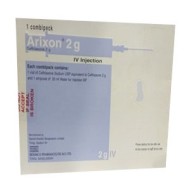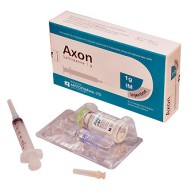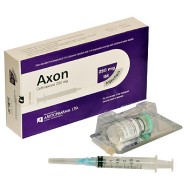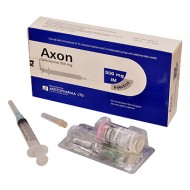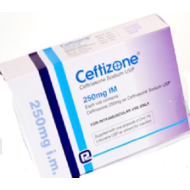
- Stock: In Stock
- Brand: Aristopharma
- Product ID: Ceftriaxone
Available Options
🔒 100% Secure Payment | bKash | Nagad | SSLCommerz | COD
⭐ Become a FREE Member: 7% Extra Savings • Free Delivery • Refill Reminders • Priority Support
This Item is for pre order
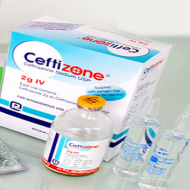
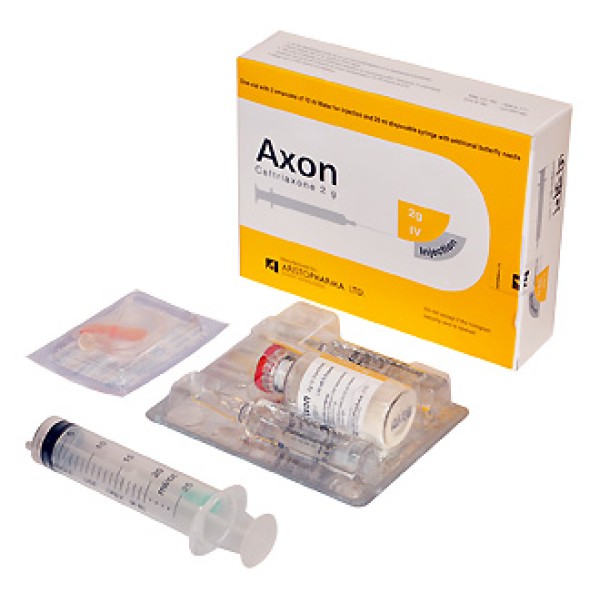
Axon 2 gm IV Injection (Ceftriaxone 2 g) — Clinical Overview
| Brand Name | Axon 2 gm IV Injection |
|---|---|
| Generic Name | Ceftriaxone Sodium |
| Manufacturer | ACI Limited, Bangladesh |
| Strength | 2 g (2000 mg) per vial |
| Dosage Form | Powder for IV Injection/Infusion |
| Drug Class | Third-Generation Cephalosporin Antibiotic |
| Primary Route | Intravenous (IV) — Slow Push or Infusion |
| Indications | Bacterial Meningitis, Severe Sepsis, Complicated Serious Infections |
About Axon 2 gm IV Injection
Axon 2 gm IV Injection is the highest-strength ceftriaxone formulation in the Axon range by ACI Limited, Bangladesh, containing ceftriaxone sodium 2 g per vial. The 2 g dose is reserved for the most serious bacterial infections where maximum ceftriaxone exposure is required — principally bacterial meningitis, severe community-acquired sepsis, and complicated infections with deep tissue penetration requirements. In clinical practice, 2 g once or twice daily represents the upper end of the ceftriaxone dosing spectrum for adults, beyond which alternative or combination antibiotic regimens are typically required.
The IV designation in this product reflects its primary route: at 2 g, IM administration is not recommended (volume too large and painful for single-site IM injection). Administration is via slow IV push or preferably IV infusion. In Bangladeshi intensive care units and medical wards managing life-threatening infections, Axon 2 gm IV represents a critical high-dose option within the third-generation cephalosporin class.
Indications for the 2 g Dose
- Bacterial meningitis: 2 g IV every 12 hours (4 g/day total) for Neisseria meningitidis, Haemophilus influenzae, and sensitive Streptococcus pneumoniae — ceftriaxone penetrates the inflamed blood-brain barrier effectively to achieve bactericidal CSF concentrations
- Severe community-acquired sepsis: 2 g IV once daily as part of empirical sepsis management where gram-negative bacteraemia from urinary, biliary, or gastrointestinal sources is suspected
- Complicated intra-abdominal infections: In combination with metronidazole for aerobic gram-negative + anaerobic coverage
- Infective endocarditis (selected organisms): Ceftriaxone 2 g IV once daily for 4 weeks is guideline-recommended for Enterococcus faecalis endocarditis combined with ampicillin, and for viridans streptococcal endocarditis
- Lyme neuroborreliosis: 2 g IV once daily for 14–28 days — ceftriaxone achieves therapeutic CNS penetration for neurological Lyme disease
- Severe typhoid with complications: Complicated enteric fever with intestinal perforation, peritonitis, or CNS involvement may require 2 g IV dosing
Pharmacokinetics at the 2 g Dose
- Peak plasma concentration: ~250 mg/L after 2 g IV — approximately double that seen with 1 g dosing
- CNS penetration: CSF concentrations of 1.4–6.7 mg/L achieved in patients with meningitis — exceeds MIC for N. meningitidis, H. influenzae, and many strains of S. pneumoniae
- Biliary excretion: At the 2 g dose, biliary ceftriaxone concentrations are very high — can precipitate as "sludge" in the gallbladder with prolonged use (biliary pseudolithiasis); typically resolves on stopping
- Half-life: 6–9 hours; once-daily dosing covers 24 hours for most organisms at 2 g; twice-daily for meningitis ensures higher sustained CSF levels
Dosage and Administration
- Bacterial meningitis: 2 g IV every 12 hours (adults)
- Severe sepsis and other serious infections: 2 g IV once daily
- Endocarditis: 2 g IV once daily for 4 weeks (regimen-dependent)
- Reconstitution: Dissolve 2 g in 40 ml of 0.9% normal saline or 5% dextrose; infuse over at least 30 minutes (minimum 60 minutes preferred to reduce risk of side effects)
- IV push: Not recommended at 2 g due to infusion-related reactions; always administer as infusion
- Calcium incompatibility: Absolutely contraindicated to mix or co-administer with any calcium-containing IV solution — risk of life-threatening ceftriaxone-calcium precipitate in pulmonary and renal vasculature
- Renal and hepatic impairment: Dose cap of 2 g/day should not be exceeded in patients with severe combined renal AND hepatic failure; otherwise no dose adjustment
Serious Infections in Patients with Diabetes
Patients with poorly controlled diabetes are at dramatically increased risk of life-threatening infections requiring high-dose ceftriaxone therapy:
- Rhinocerebral mucormycosis: While not treated with ceftriaxone, this life-threatening fungal infection in ketoacidotic patients often presents alongside bacterial superinfection where ceftriaxone covers gram-negative co-pathogens
- Severe necrotising soft tissue infections: Diabetic patients develop necrotising fasciitis more frequently. High-dose ceftriaxone covers the gram-negative component alongside penicillin (for streptococcal coverage) and metronidazole
- Sepsis from urinary or biliary source: The most common source of gram-negative bacteraemia in diabetic patients; 2 g ceftriaxone achieves sustained concentrations above MIC for E. coli and Klebsiella, including some intermediate-susceptibility strains
- Glycaemic monitoring in severe infection: Patients receiving IV antibiotics for severe infections typically require intensive insulin infusion protocols or frequent subcutaneous insulin correction — blood glucose should be measured hourly in ICU settings or 2-hourly in ward settings during the acute phase
Frequently Asked Questions (FAQ)
When is Axon 2 gm IV used instead of Axon 1 gm?
Axon 2 gm IV is used when the infection severity or target site requires higher ceftriaxone plasma and tissue concentrations than the standard 1 g dose provides. Key situations include bacterial meningitis (requires high CSF concentrations — typically 2 g every 12 hours), severe sepsis with gram-negative bacteraemia, infective endocarditis, complicated typhoid fever with systemic complications, and other life-threatening infections where maximising bactericidal exposure is critical. The 1 g dose is sufficient for most adult infections including uncomplicated typhoid, CAP, UTI, and moderate diabetic foot infections.
Why must Axon 2 gm be given by IV infusion rather than injection?
At the 2 g dose, rapid IV push administration can cause infusion-related reactions including flushing, hypotension, and cardiovascular disturbances due to the high concentration of drug reaching the circulation quickly. Administering as a 30–60 minute infusion (diluted in 40–100 ml of normal saline or dextrose) reduces peak concentration spikes, improves tolerability, and is required for safe administration. IM injection is also not feasible at 2 g — the volume required (approximately 7 ml) is too large for a single intramuscular injection site and would cause unacceptable tissue damage.
Can ceftriaxone 2 g be used in diabetic patients with kidney disease?
Generally yes — ceftriaxone has dual excretion (40–67% renal, 33–67% biliary), so it maintains therapeutic levels even in renal impairment without significant accumulation. Unlike aminoglycosides or vancomycin, routine ceftriaxone therapeutic drug monitoring is not required in renal impairment. However, in severe combined renal AND hepatic failure (both pathways compromised), the maximum dose should be capped at 2 g/day and clinical monitoring intensified. For isolated diabetic nephropathy, standard dosing applies up to the 2 g/day limit.
What is ceftriaxone-calcium incompatibility and why does it matter?
Ceftriaxone and calcium ions form insoluble calcium-ceftriaxone salts that precipitate as solid particles. At therapeutic concentrations and temperatures, these precipitates can form in IV lines or in the bloodstream, causing pulmonary emboli, renal tubular obstruction, and other life-threatening complications. This means Axon 2 gm IV must never be mixed with or infused simultaneously via the same IV line as Ringer's lactate, Hartmann's solution, calcium gluconate, or any other calcium-containing fluid. Normal saline and 5% dextrose are safe diluents. Flush IV lines with compatible solution between administrations.