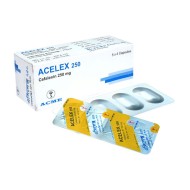
- Stock: In Stock
- Brand: Square Pharmaceuticals
- Product ID: Cephradine
🔒 100% Secure Payment | bKash | Nagad | SSLCommerz | COD
⭐ Become a FREE Member: 7% Extra Savings • Free Delivery • Refill Reminders • Priority Support
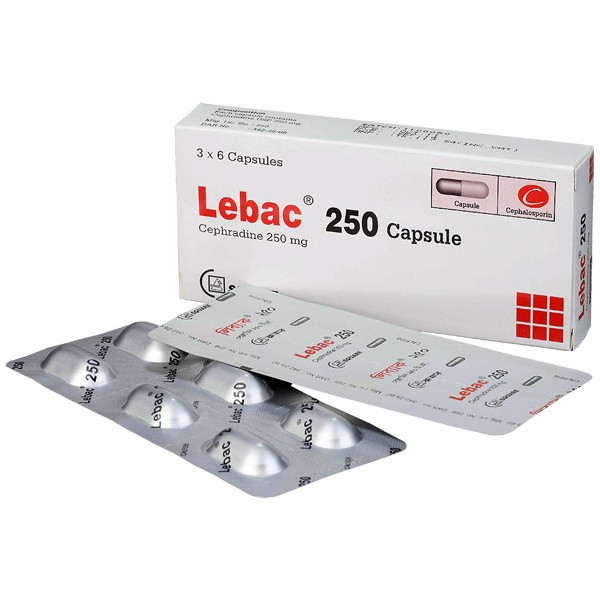
| Generic Name | Cephradine |
|---|---|
| Strength | 250 mg |
| Dosage Form | Capsule |
| Manufacturer | Square Pharmaceuticals PLC |
| Therapeutic Class | First generation cephalosporins |
| Pack Size | 3×6 (18 capsules) |
Overview
Lebac 250 mg Capsule contains Cephradine, a semisynthetic first-generation cephalosporin antibiotic manufactured by Square Pharmaceuticals PLC. It exerts bactericidal action by inhibiting bacterial cell wall synthesis — specifically the cross-linking of peptidoglycan — leading to formation of a weakened cell wall with multiple pores, and ultimately bacterial lysis due to osmotic pressure. Cephradine is active against both penicillinase-producing and non-producing staphylococci, making it effective even against some ampicillin-resistant strains.
Lebac is indicated for infections caused by susceptible Gram-positive and Gram-negative bacteria including upper respiratory tract infections (sinusitis, pharyngitis, tonsillitis, otitis media), lower respiratory tract infections (bronchitis, pneumonia), urinary tract infections (cystitis, urethritis, pyelonephritis), and skin and soft tissue infections (abscess, cellulitis, furunculosis, impetigo).
Dosage and Administration
Adults:
Urinary tract infections: 500 mg four times daily or 1 g twice daily. Respiratory tract infections and skin/soft tissue infections: 250–500 mg four times daily or 500 mg–1 g twice daily, depending on severity. Maximum daily dose: 4 g.
Children: 25–50 mg/kg/day in 2–4 equally divided doses. For otitis media: 75–100 mg/kg/day in divided doses every 6–12 hours.
Elderly: Standard adult dose is appropriate. Dosage adjustment is necessary in renal impairment (see prescribing information for CrCl-based dosing). Treatment should continue for at least 2–3 days after symptoms resolve, and at least 10 days for haemolytic streptococcal infections.
Interaction
Concomitant use with nephrotoxic drugs such as aminoglycosides may increase the risk of kidney damage. Loop diuretics (furosemide, ethacrynic acid) and probenecid may further enhance the risk of renal toxicity. Cephradine may interfere with certain urine glucose tests (Benedict's or Fehling's solutions, Clinitest tablets), producing false-positive results; enzyme-based tests (Clinistix, Diastix) are not affected.
Contraindications
Lebac is contraindicated in patients with known or suspected hypersensitivity to cephalosporins. It should be used with caution in patients hypersensitive to penicillins due to possible cross-sensitivity between beta-lactam antibiotics.
Side Effects
Gastrointestinal effects are most common: nausea, vomiting, diarrhea, abdominal pain, glossitis, and heartburn. Hypersensitivity reactions include skin rashes, urticaria, joint pains, and edema. Rare but serious effects include blood dyscrasias (thrombocytopenia, leucopenia, agranulocytosis, aplastic anemia, hemolytic anemia), anaphylaxis, serum sickness-like reactions, transient hepatitis, cholestatic jaundice, and reversible interstitial nephritis. CNS effects such as dizziness, nervousness, and hyperactivity may occur rarely. Candida overgrowth and vaginitis may result from prolonged use.
Pregnancy and Lactation
Animal studies have not demonstrated teratogenicity, but safety in human pregnancy has not been fully established. Cephradine is excreted in breast milk and should be used with caution in lactating mothers. Patients should be cautioned against operating hazardous machinery, including automobiles, due to the possibility of dizziness.
Precautions and Warnings
Prolonged use may lead to superinfection with resistant organisms; monitor accordingly. Cross-sensitivity with penicillins must be considered — use with care in penicillin-allergic patients. Cephalosporins may cause a positive Coombs' test result; this should be noted when testing neonates whose mothers received cephalosporins before labour. Lebac capsules contain lactose and are unsuitable for patients with galactose intolerance, Lapp lactase deficiency, or glucose-galactose malabsorption. Dose adjustment is required in renal impairment.
Storage Conditions
Keep in a dry place away from light and heat. Keep out of reach of children. Do not use after the expiry date. To be dispensed only on the prescription of a registered physician.
Frequently Asked Questions
Q: What types of infections is Lebac 250 mg used for?
A: Lebac 250 mg is used for bacterial infections including respiratory tract infections (sinusitis, tonsillitis, bronchitis, pneumonia), urinary tract infections, and skin and soft tissue infections caused by susceptible Gram-positive and Gram-negative organisms.
Q: Can Lebac cause a false result in a urine glucose test?
A: Yes — Cephradine can cause false-positive results in Benedict's or Fehling's solution-based urine glucose tests. Enzyme-based glucose tests (such as Clinistix or Diastix) are not affected and should be used for reliable results.