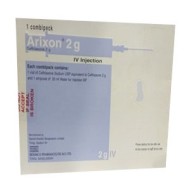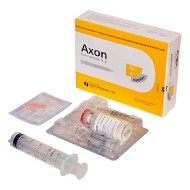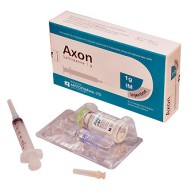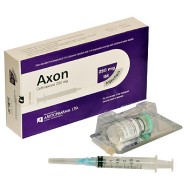

- Stock: Out Of Stock
- Brand: ACI Pharmaceuticals
- Product ID: Ceftriaxone
🔒 100% Secure Payment | bKash | Nagad | SSLCommerz | COD
⭐ Become a FREE Member: 7% Extra Savings • Free Delivery • Refill Reminders • Priority Support
This Item is for pre order
Aciphin IM 1g Injection — Ceftriaxone 1000mg Intramuscular
| Product Overview | |
|---|---|
| Brand Name | Aciphin® IM 1g |
| Generic Name | Ceftriaxone Sodium USP equivalent to Ceftriaxone 1000 mg (1g) |
| Manufacturer | ACI Pharmaceuticals Ltd., Bangladesh |
| Drug Class | 3rd Generation Cephalosporin Antibiotic |
| Dosage Form | Dry Powder for Intramuscular (IM) Injection |
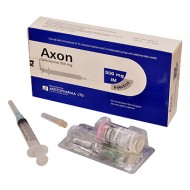
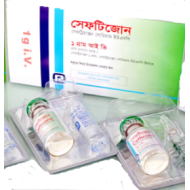
| Pack Contents (IM) | 1 vial ceftriaxone 1g + 1 ampoule 3.5ml Xylone 1% (Lidocaine HCl 1%) + 5ml syringe + first aid bandage + alcohol pad |
| Route | Intramuscular (IM) ONLY — NEVER give intravenously |
| Reconstitution | Dissolve 1g in 3.5ml Xylone 1% (lidocaine HCl 1%); administer as deep IM injection — split between two sites if needed for patient comfort |
| Prescription Status | Prescription Required (Rx) |
| Storage | Below 30°C, protected from light. Use reconstituted solution immediately. |
1. Indications
Aciphin® IM 1g is the standard full adult dose of ceftriaxone for outpatient or clinic-based intramuscular therapy. Indicated for: community-acquired pneumonia (outpatient); complicated UTI and pyelonephritis; skin and soft tissue infections (cellulitis, wound infections, abscesses); bone and joint infections; intra-abdominal infections (in combination); ENT infections; step-down from IV ceftriaxone post-hospitalisation; infections in immunocompromised patients (outpatient or day-care); typhoid fever (outpatient with close monitoring); and surgical prophylaxis (single pre-operative IM dose).
Diabetes relevance: The 1g IM daily dose is the standard outpatient treatment for mild-to-moderate diabetic foot infections, post-discharge completion of IV-initiated antibiotic courses, and community-managed UTIs and soft tissue infections in diabetic patients. Avoids IV line complications, suitable for community health centres and day-care settings.
2. Mechanism of Action
Ceftriaxone inhibits bacterial cell wall synthesis via PBP binding, preventing peptidoglycan cross-linking, leading to osmotic lysis (bactericidal). At 1g IM, achieves serum concentrations equivalent to 1g IV given the near-complete IM bioavailability. Time-dependent killing: serum concentrations remain above MIC for susceptible organisms for the full 24-hour dosing interval (half-life 6–9h). Broad Gram-positive and Gram-negative spectrum.
3. Dosage & Administration
Adults: 1–2g IM once daily. Surgical prophylaxis: 1g single IM pre-operative dose. Children: 20–80 mg/kg/day.
Reconstitution: Draw 3.5ml Xylone 1% from the ampoule using the 5ml syringe. Inject into the 1g ceftriaxone vial. Gently swirl until fully dissolved. The reconstituted volume (~4ml) may be split between two IM injection sites (e.g., bilateral gluteal) for patient comfort if needed. Inject deep IM into upper outer quadrant of gluteus maximus or vastus lateralis — aspirate to confirm non-vascular placement.
NEVER administer this reconstituted solution intravenously — lidocaine cardiac toxicity.
Duration: 7–14 days typically. Continue 2–3 days after symptom resolution.
4. Side Effects
IM site: soreness, induration (lidocaine minimises pain). GI: nausea, diarrhoea. CDAD (report persistent diarrhoea). Haematological: eosinophilia, thrombocytopenia, leucopaenia. Biliary pseudolithiasis (reversible). Hepatic: transient raised ALT/AST. Hypersensitivity: rash, urticaria; anaphylaxis (rare). Lidocaine 35mg (3.5ml×1%): safe systemically at this IM dose in patients without cardiac conduction disorders.
5. Contraindications
Hypersensitivity to ceftriaxone, cephalosporins, or lidocaine; penicillin anaphylaxis history; hyperbilirubinaemic/premature neonates; cardiac conduction disorders (lidocaine caution). IV administration absolutely contraindicated.
6. Warnings & Precautions
Screen for cephalosporin, penicillin, and lidocaine/local anaesthetic allergy. Aspirate before IM injection. Have epinephrine available. CDAD monitoring for prolonged therapy. Clearly label and store IM and IV packs separately. Higher lidocaine volume (3.5ml) makes route-check even more critical for the 1g pack.
7. Drug Interactions
Aminoglycosides: synergistic (administer at separate IM sites). Warfarin: monitor INR. Anti-arrhythmics: additive with lidocaine at high systemic doses (clinically low risk at 35mg IM). No significant interactions with metformin, insulin, or common diabetes medications.
8. Pharmacokinetics
IM bioavailability ~100%. Peak serum Cmax at 1–2h post-IM injection. Half-life 6–9h. Dual elimination ~50% renal, ~50% biliary. Excellent tissue penetration: bone, lung, bile, peritoneum, CSF (inflamed meninges). Lidocaine 35mg: peak serum ~0.5 mcg/ml — well below antiarrhythmic therapeutic range (1.5–5 mcg/ml).
9. Storage
Store below 30°C, protected from light and moisture. Use reconstituted IM solution immediately. Do not store reconstituted product.
10. Course Completion
Complete the full prescribed course. Step-down from IV: continue IM for total planned antibiotic duration. For surgical prophylaxis: single dose only — do not repeat without physician direction.
11. Overdose
No specific antidote. Not dialyzable. Supportive management. In case of accidental IV administration of lidocaine-reconstituted IM solution: monitor ECG, treat arrhythmia aggressively, resuscitate as needed — medical emergency.
12. Clinical Evidence
WHO Essential Medicine. Once-daily IM ceftriaxone 1g is the backbone of outpatient parenteral antibiotic therapy (OPAT) programs in Bangladesh and globally. RCT evidence supports IM equivalence to IV for pneumonia (IDSA), pyelonephritis, and soft tissue infections. Preferred for diabetic foot infection step-down in Bangladeshi outpatient settings.
13. Patient Counselling
Inform provider of any local anaesthetic or antibiotic allergy. Split-site injection reduces discomfort — ask your healthcare provider. Report rash, breathing difficulty, or diarrhoea. Avoid self-administration. Complete full prescribed course. Return for each scheduled injection — do not skip doses.
Frequently Asked Questions (FAQ)
Q1. Can the 1g IM ceftriaxone dose be split between two injection sites?
Yes — this is commonly recommended for the 1g dose. After reconstituting 1g ceftriaxone in 3.5ml Xylone 1%, the resulting ~4ml solution can be divided equally (approximately 2ml per site) and injected deep IM into both upper outer gluteal regions simultaneously. Splitting reduces local discomfort from a larger volume at a single site. Each injection should still be given deep into a large muscle mass with aspiration before injection.
Q2. Why does the 1g IM pack use 3.5ml Xylone 1% while the 500mg pack uses 2ml?
Higher ceftriaxone powder mass (1g vs 500mg) requires more solvent volume for complete dissolution and to achieve an injectable concentration. Using 3.5ml for 1g gives approximately 250mg/ml — this is the standard WHO-recommended concentration for IM ceftriaxone. Using less solvent would create a viscous, poorly injectable suspension. The higher lidocaine volume (35mg vs 20mg) is still well below the systemic toxic dose for IM absorption.
Q3. Is once-daily IM ceftriaxone 1g as effective as twice-daily IV dosing?
Yes — multiple pharmacokinetic/pharmacodynamic studies and clinical trials confirm that once-daily IM 1g ceftriaxone achieves equivalent or superior efficacy compared to twice-daily IV regimens for most common bacterial infections. This is because ceftriaxone's long half-life (6–9h) keeps serum concentrations above the MIC for susceptible organisms throughout the 24-hour interval after a single 1g dose. International guidelines (IDSA, BTS) endorse once-daily IM ceftriaxone for outpatient pneumonia, UTI, and other eligible infections.
Q4. How does Aciphin IM 1g differ from Aciphin IV 1g beyond the route?
The clinical drug is identical — ceftriaxone 1g in both cases. The key differences are: (1) Solvent — IM uses Xylone 1% (lidocaine 1%), IV uses Water for Injection; (2) Pack contents — IM includes a 5ml syringe + bandage + pad (no butterfly needle), IV includes a 10ml syringe + butterfly needle + bandage + pad; (3) Onset — IV achieves immediate peak levels, IM peaks at 1–2h; (4) Setting — IM is suited to outpatient/clinic use, IV requires hospital/IV access. For non-severe infections, IM is preferred to avoid IV line complications.
⚕ Medical Disclaimer: Aciphin® IM 1g is a prescription antibiotic for IM administration by trained healthcare professionals only. Information sourced from ACI Pharmaceuticals Ltd. official prescribing data. Educational purposes only. Never administer the lidocaine-reconstituted solution intravenously.